
VISION BOARD · FAMILY
Family vision board: ideas, an example and a free template
Family vision board ideas to make with kids: 18 pictures, 18 words, an example board, and simple routines like dinners together and reading.
The short answer
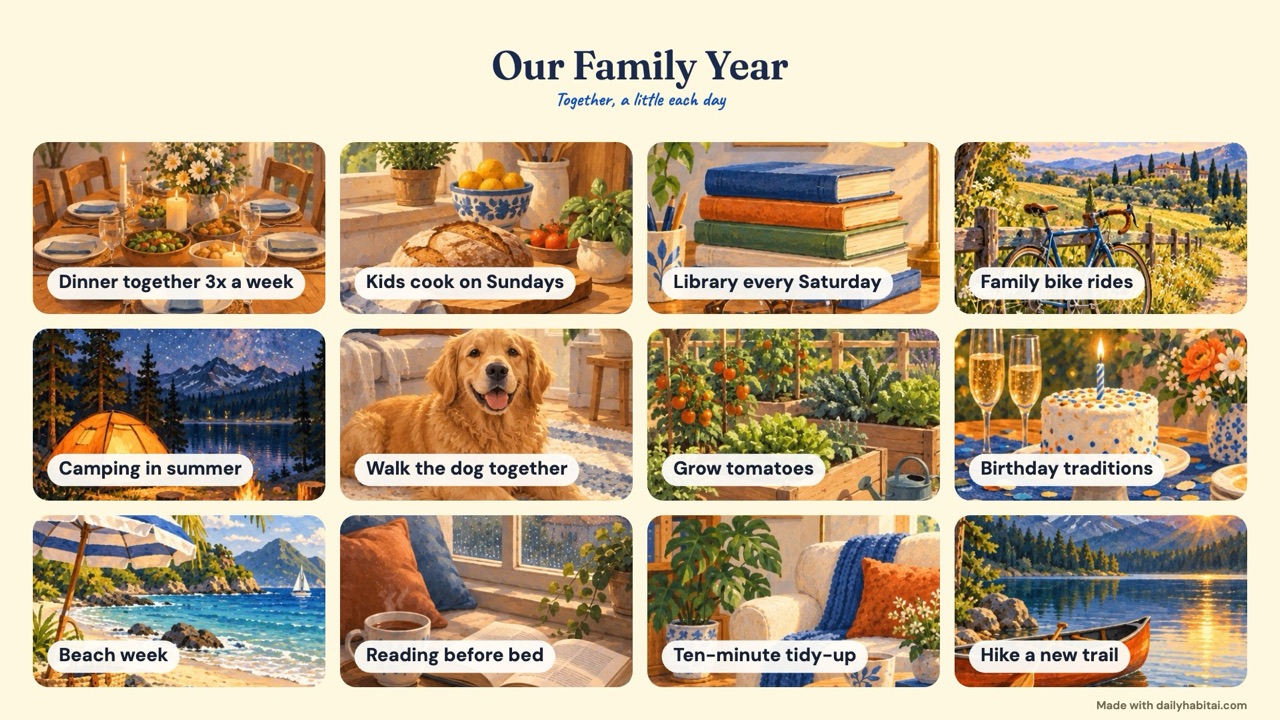
A family vision board should be made together, with at least one picture from every family member. Include time together, a trip, home, learning, health and kindness. Give each picture one simple routine, such as dinner together three nights a week, and hang the board where everyone eats. Review it each month.
Family boards online are often full of big vacations and perfect kitchens. Kids respond better to things they can do this month: a picnic, a library trip, a family bike ride, a dinner where everyone helps.
This page gives you picture and word ideas, an example board, tips for making it with young kids and teens, and three routines the family can track in the DailyHabitAI app. Our separate guide covers vision boards that kids make on their own.
Family vision board ideas
Pictures to use
- A dinner table set for your whole family
- Kids helping in the kitchen
- A library card or a stack of picture books
- Bikes lined up for a family ride
- A tent for a backyard or park campout
- A board game night
- A garden bed or herb pot the kids care for
- A pet you walk together
- A trip everyone votes on
- Grandparents or cousins you want to visit
- A chore chart with stickers
- A birthday or holiday tradition
- A picnic blanket in the park
- Kids' art on the fridge
- A cozy bedtime reading nook
- A volunteer day or a donation box
- A sports field or dance class
- A family photo from a happy day
Words and phrases
- Team us
- Dinner together
- Be kind
- Try new things
- Read together
- Outside every weekend
- Help each other
- Say sorry, start over
- Family fun Friday
- Grow and learn
- Less screens, more play
- Everyone helps
- Laugh a lot
- Adventure awaits
- Home is us
- Thank you
- Healthy and happy
- Make memories
Print these and more with the vision board words sheet.
How to make a family vision board
- Hold a short family meeting with snacks and ask each person what they want the family to do more of this year.
- Let every family member choose at least one picture, including the youngest.
- Group the pictures into a few themes, like together, outside, learning and helping.
- Under each picture, write one routine in kid-friendly words, like "Library every Saturday."
- Hang the board near the table and check it at a monthly family dinner, adding a sticker for each routine kept.
VISION BOARD + DAILYHABITAI APP
How to use your vision board with the DailyHabitAI app
Your board shows what you want. The free app handles the how: one picture becomes a 30-day plan with a small daily step and a reminder. No account, it stays on your phone.
From tile to daily habit
| Tile on your board | Daily habit in the app | Start |
|---|---|---|
| Dinner together 3x a week | Put everyone's phones in a basket during dinner, when we sit down to eat | Make it my plan |
| Reading before bed | Read one picture book together, after bath time | Make it my plan |
| Kids cook on Sundays | Let one child wash or chop one vegetable, when I start cooking dinner | Make it my plan |
Five ways to use the board and the app together
- Board to plan in about two minutes. In the vision board maker, tap Make it a habit under any tile. The plan builder opens with your goal and your reason already filled in.
- Two nudges a day. Set the board as your lock screen and turn on the app's reminder at your cue time. You see the why on your wallpaper and get the small step from the app.
- Three goals at a time. The app keeps up to three active habits. Pick three tiles for this season, then archive one and bring in the next when it feels easy.
- Busy weeks do not break the board. Every day in the plan has a two-minute hard-day version, so a tile keeps moving even on a bad day.
- A monthly check-in. The app prompts short reviews on days 7, 14, 21 and 28. On the first of each month, look at the board and swap any picture that no longer fits.
Common mistakes to avoid
- Parents choosing every picture, so kids feel no ownership.
- Only big, expensive goals, like a theme-park trip, with nothing for ordinary weeks.
- Turning the board into a chore chart with nothing fun on it.
- Forgetting to look at it again after the first month.
Frequently asked questions
What should a family vision board include?
Include things you want to do together, like dinners, trips and weekend outings, plus learning, health, home and kindness. Let each person add at least one picture of their own. Give each picture one routine, such as library every Saturday, so the board shapes everyday family life.
How do you make a family vision board with kids?
Keep it short and hands-on. Ask each child what they want to do more of, and let them pick or draw pictures. Toddlers can choose between two images, and teens can own a section. Write routines in simple words, and add a sticker each time the family does one.
Should family dinners go on the vision board?
If shared meals matter to you, yes. In a UK study of 11,396 adults, eating home-cooked meals more than five times a week was associated with eating more fruit and vegetables than eating them fewer than three times. That is an association, and it covers home cooking, not family dinners specifically.
How often should a family update the board?
Glance at it weekly and review it once a month over dinner. Celebrate what happened, then swap out tiles that no longer excite anyone. Across 138 studies, monitoring progress helped people reach goals, especially when progress was physically recorded, so stickers or check marks on the board are worth it.
Sources and evidence
- Mills et al. (2017): Frequency of eating home cooked meals and potential benefits for diet and health — In 11,396 UK adults aged 29 to 64, eating home-cooked meals more than five times a week versus fewer than three was associated with 62.3 g more fruit and 97.8 g more vegetables daily; the design is cross-sectional, so causality is not shown.
- Harkin et al. (2016): Does monitoring goal progress promote goal attainment? A meta-analysis of the experimental evidence — Across 138 randomized studies (N = 19,951), interventions that increased progress monitoring promoted goal attainment (d = 0.40), with larger effects when progress was physically recorded or made public.
- Gollwitzer & Sheeran (2006): Implementation intentions and goal achievement: A meta-analysis of effects and processes — Across 94 independent tests, if-then plans that specify when, where and how to act had a medium-to-large effect (d = .65) on goal attainment.