What are good habits for kids?
Good habits for kids are small things a child does at the same point most days until they need fewer and fewer reminders: brushing teeth, washing hands, playing actively, going to bed at a regular time, eating fruit and vegetables, drinking water, tidying up, helping at home and using kind words. Children learn them mostly by watching adults, repeating them in a routine and hearing specific praise.
This guide lists 50 good habits for children in four age bands (3 to 5, 6 to 8, 9 to 12 and teens), each with a way to teach it. It starts with what the CDC and the American Academy of Pediatrics (AAP) recommend for healthy habits for kids, then shows how to turn one to three habits into a printable kids habit chart. It is general information, not medical advice; your child's pediatrician knows what fits your child.
For adults' habits, see the healthy habits list and the good habits list.
What do the CDC and AAP recommend for healthy habits for kids?
| Area |
What the CDC and AAP say |
| Sleep |
10 to 13 hours a day at ages 3 to 5 (including naps), 9 to 12 hours at 6 to 12, and 8 to 10 hours at 13 to 17 (CDC) |
| Active play |
Ages 3 to 5: active throughout the day. Ages 6 to 17: 60 minutes or more a day, with vigorous, muscle- and bone-strengthening activity on at least 3 days a week each (CDC) |
| Screens |
Under 18 months, no screens except video chatting; ages 2 to 5, up to 1 hour a day of high-quality programs, watched together; for all ages, a family media plan with screen-free times such as meals and before bed (AAP; AAP media plan) |
| Drinks |
Water and plain milk; about 4 cups of fluids a day at ages 1 to 3, about 5 cups at 4 to 8 and 7 to 8 cups for older children; limit juice and avoid sugary drinks (AAP) |
| Food |
Add a fruit or vegetable to every meal or snack, eat together and eat them yourself (AAP) |
| Teeth |
Brush twice a day with fluoride toothpaste; under 6, a pea-sized amount, spit it out, and an adult helps until they brush well (CDC) |
| Hands |
Scrub with soap for at least 20 seconds, for example before eating and after the toilet (CDC) |
| Family meals |
Eating together at least 3 times a week is linked with physical, emotional, social and academic benefits; phones in another room (AAP) |
| Chores |
Age-appropriate chores, such as making the bed at 5 to 7 and helping make dinner at 8 to 10, boost a child's self-esteem (AAP) |
In 2026 the AAP published a policy statement that moves beyond fixed screen-time limits toward the quality of content, how involved caregivers are and how apps are designed (Munzer et al., 2026). The guide to screen time rules for kids covers rules by age in more detail.
How do you teach a child a good habit?
- Pick one or two habits. The CDC suggests starting with a couple of specific behaviors, such as "Use polite words", rather than a long list (CDC).
- Do it yourself, where they can see. The AAP's advice on water, fruit and vegetables, physical activity and screens starts in the same place: be a role model (HealthyChildren.org).
- Attach it to the same moment every day. "After breakfast, we brush teeth." The AAP's advice on chores is to build regular routines so children remember without constant reminders (HealthyChildren.org).
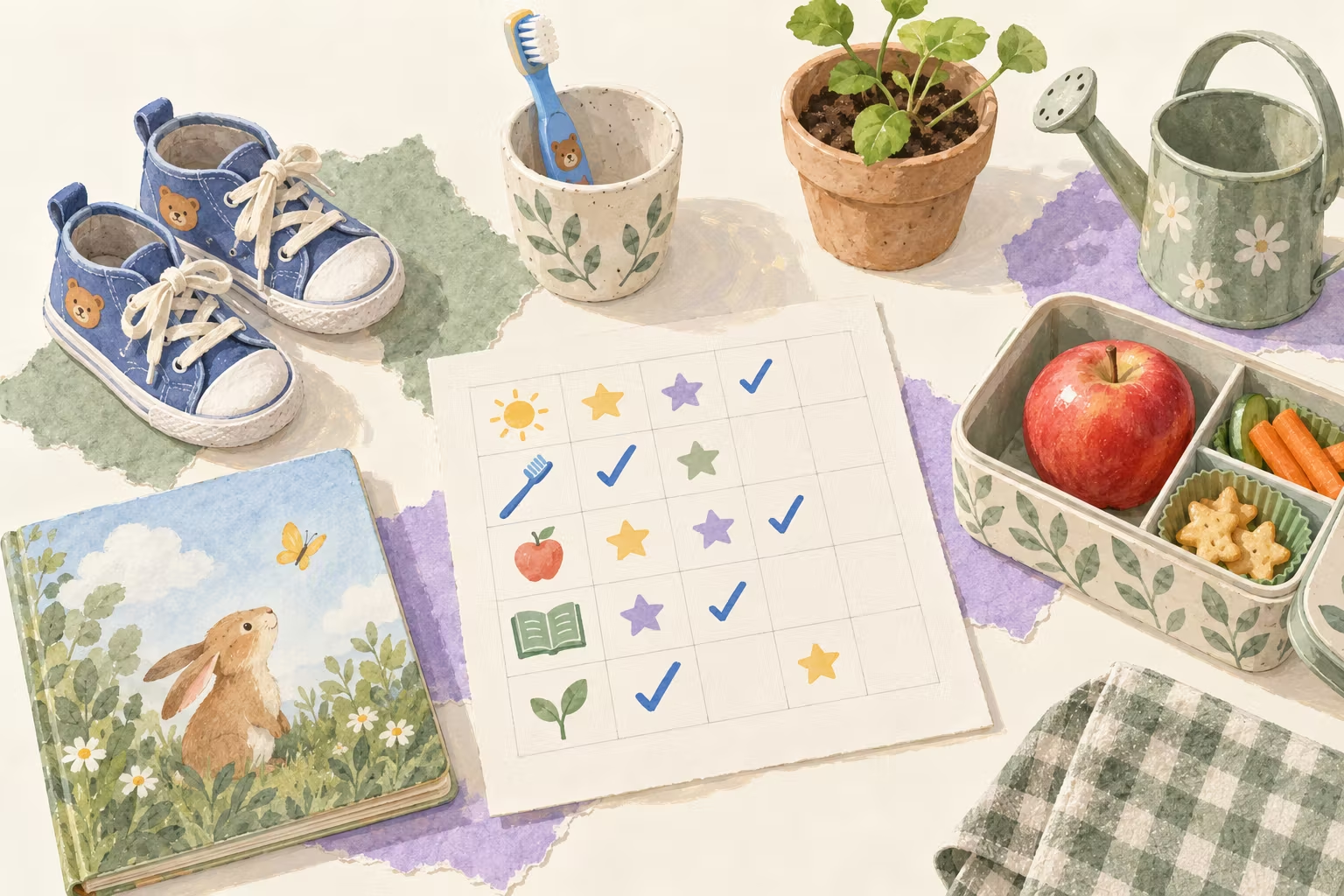
- Give a visual cue. A posted chart or checklist shows what is expected, and pictures work for children who do not read yet.
- Praise the exact thing, right away. "You put your toys away!" tells a child what you liked. The CDC says labeled praise works best and that rewards are most effective right after the behavior.
- Keep rewards small and fair. Stars suit early school-age children, and points or contracts suit older ones. Let your child help choose rewards, and never take away a reward they have already earned (HealthyChildren.org).
- Fade the chart when the habit runs on its own. The AAP suggests phasing a reward system out once your child stops asking for their points.
How do you use this list of good habits for kids?
Read the band for your child's age, and glance at the bands on either side: children develop at different speeds. Tick the box next to one to three habits. Then put them on the free kids star chart, which prints six habits by seven days with a reward line, turn the first one into a 30-day family plan, or print the whole list on one page.
Your ticks stay in this browser only. Nothing is sent to us unless you open the chart or the plan builder.
Good habits for preschoolers, ages 3 to 5
At this age, habits are learned side by side with an adult. Keep each habit to one step, show it with your own hands, use songs and pictures, and expect to do it together for weeks.
| Habit |
How to teach it |
| 1. Brush teeth morning and night |
Brush side by side, then take your turn to brush their teeth with a pea-sized dab of fluoride toothpaste. |
| 2. Wash hands before eating |
Sing "Happy Birthday" twice together at the sink before every meal. |
| 3. Play actively every day |
Put on music and dance together before dinner. |
| 4. Follow the same bedtime routine |
Use three picture cards every night: bath, book, bed. |
| 5. Put toys away after play |
Sing a short tidy-up song and race them to the toy box. |
| 6. Drink water with meals |
Let them pour water from a small jug into their own cup. |
| 7. Try one bite of a new food |
Put a small piece on their plate and eat some yourself first. |
| 8. Say please and thank you |
Say it yourself, then praise: "You said thank you to Grandma!" |
| 9. Get dressed with a little help |
Lay out clothes the night before in the order they go on. |
| 10. Name their feelings |
Name the feeling for them: "You look frustrated. Let's take a big breath." |
| 11. Help set the table |
Give them the napkins or spoons to put out at each place. |
| 12. Look at a book every day |
Read one picture book together at the same time each day. |
Why these help: the CDC says children aged 3 to 5 should be active throughout the day and sleep 10 to 13 hours including naps, and it recommends an adult helps with brushing. Picture cards are the same idea as a visual schedule, which turns a routine into Now and Next cards for non-readers.
Good habits for kids ages 6 to 8
Early school-age children can follow a short checklist and enjoy earning stars. Teach a habit once with them, put a picture or word on the chart, and praise the first few times they do it alone.
| Habit |
How to teach it |
| 13. Brush teeth on their own |
Let them brush first, then check the back teeth together. |
| 14. Make the bed each morning |
Show them once, then add a bed picture to the morning chart. |
| 15. Get the school bag ready at night |
Hang a three-item checklist on the bag: homework, snack, water bottle. |
| 16. Play outside for an hour |
Walk or bike to school or the park together when you can. |
| 17. Eat fruit or veg at every meal |
Let them choose which vegetable goes in the cart. |
| 18. Read every day |
Take turns reading pages out loud at bedtime. |
| 19. Put dirty clothes in the hamper |
Put the hamper where they get changed, and praise the first try. |
| 20. Feed the pet at the same time |
Tie it to one moment, such as right after breakfast. |
| 21. Do homework in one spot |
Set up one table spot and sit nearby for the first week. |
| 22. Stop screens when the timer rings |
Agree on the time first, then give a five-minute warning. |
| 23. Say sorry and fix it |
Model it: apologize to your child when you get something wrong. |
| 24. Wash hands after the toilet |
Put a picture reminder at eye level by the sink. |
| 25. Clear their plate after meals |
Show where it goes and say thank you every time at first. |
Why these help: the AAP lists making the bed, setting and clearing the table, putting dirty clothes in the hamper and filling a pet's food dish as good chores at 5 to 7, and says helping at home boosts a child's self-esteem. From age 6, the CDC target is 60 minutes or more of activity a day. A morning routine chart or chore chart gives these habits a place to live, and the guide to a morning routine for kids has school-day charts by age.
Good habits for kids ages 9 to 12
Children this age can plan ahead and take over whole jobs. Hand over one habit at a time, agree on when it happens, and switch from stars to points or a simple agreement if stars feel babyish.
| Habit |
How to teach it |
| 26. Make their own healthy snack |
Keep fruit, yogurt and whole-grain crackers on a shelf they can reach. |
| 27. Help cook dinner once a week |
Give them one job, like washing vegetables or stirring the pot. |
| 28. Put away their own laundry |
Fold one load together, then hand the job over. |
| 29. Sleep 9 to 12 hours a night |
Agree on a lights-out time and keep weekend wake-ups within an hour of it. |
| 30. Get 60 minutes of activity daily |
Help them pick one sport or active hobby they actually like. |
| 31. Plan the week's homework |
Sit together on Sunday and write due dates on a calendar. |
| 32. Carry a water bottle |
Let them choose the bottle and fill it the night before. |
| 33. Charge devices outside the bedroom |
Make a family charging spot and use it yourself. |
| 34. Save part of their allowance |
Use three jars or envelopes: spend, save and give. |
| 35. Share one good thing a day |
Ask at dinner for one good thing from the day, and go first. |
| 36. Reset their room weekly |
Set a 10-minute timer on Saturday and tidy your own space at the same time. |
| 37. Unload the dishwasher |
Teach one rack at a time and praise the effort, not the speed. |
| 38. Solve problems with words |
Practice what to say before a hard moment, then praise them when they use it. |
Why these help: the AAP adds vacuuming, helping make dinner, making their own snacks and putting away laundry at 8 to 10, and cleaning the kitchen, unloading the dishwasher and doing laundry at 11 to 12. The CDC recommends 9 to 12 hours of sleep at 6 to 12. The homework planner and the after school routine chart help with habits 21 and 31, and the allowance calculator shows weekly amounts by age with a spend, save and give split for habit 34.
Good habits for teens, ages 13 to 17
Teens keep habits they chose themselves. Ask what they want to get better at, offer a habit or two from this list, agree on the details together and step back. Check in weekly instead of reminding daily.
| Habit |
How to teach it |
| 39. Sleep 8 to 10 hours a night |
Agree on a phone-down time and a charger spot outside the bedroom. |
| 40. Move 60 minutes a day |
Offer rides or company for a sport, walk or gym session they choose. |
| 41. Cook a simple meal each week |
Let them plan and cook one dinner a week, with you as the helper. |
| 42. Do their own laundry |
Show the machine once, then let them own one load a week. |
| 43. Choose water over sugary drinks |
Keep cold water in the fridge and stop buying soda and energy drinks. |
| 44. Run their own schedule |
Hand over the family calendar for their activities and check in weekly. |
| 45. Keep meals phone-free |
Make the table phone-free for everyone, adults included. |
| 46. Help with a younger sibling |
Give a clear, short job, like reading the bedtime story. |
| 47. Track their spending |
Help them write down one month of spending in a notebook or app. |
| 48. Plan study time before screens |
Ask them to block study time in their calendar before games or social media. |
| 49. Talk about their day |
Ask one open-ended question in the car and listen more than you talk. |
| 50. Care for their teeth unprompted |
Agree on morning and night brushing, then stop reminding and check in weekly. |
Why these help: the CDC recommends 8 to 10 hours of sleep at 13 to 17, and 60 minutes of daily activity for ages 6 to 17. The AAP suggests teen chores such as cleaning the kitchen after meals and caring for younger siblings (HealthyChildren.org), says older kids can plan full family meals, and recommends open-ended questions and putting phones in another room at the table. Families who want screen rules in writing can use the screen time contract for kids.
How do you make a printable kids habit chart?
Pick one to three habits above and choose Put these on a kids star chart. It opens the free habit tracker template on the kids star chart design with your picks filled in: six habit rows, seven days with big star boxes, a name line and a reward line, on one page. You can edit the words before you print.
Then put the chart where the habit happens, such as the bathroom mirror for brushing teeth, and let your child color in the star right after doing it. Praise the habit, not the star.
| Chart |
Best for |
| Kids star chart |
One to six daily habits, ticked or colored in each day of the week |
| Reward chart |
One habit with stickers toward a reward your child helped choose |
| Behavior chart |
Behaviors such as kind words or getting ready on time, rated for each part of the day |
| Visual schedule |
Children who do not read yet, with picture cards in order |
| Chore chart |
Jobs around the house, by day or by child |
| Bedtime routine chart |
The evening steps from bath to lights out |
If behavior rather than routine is the hard part, read how to use a behavior chart for how to pick behaviors, rate them fairly and fade the chart out.
Which good habit should your child start with?
| If this sounds like your child |
Start with |
Why |
| Mornings are a rush and things get forgotten |
Getting the school bag ready at night |
Moves the hard part to a calm moment |
| Bedtime drags on |
The same three-step bedtime routine |
Predictable steps cut down on negotiating |
| They are on screens most afternoons |
Stopping screens when the timer rings |
One clear rule, agreed in advance |
| They drink juice or soda most days |
Water with meals |
One swap, easy to see on a chart |
| Toys and clothes end up everywhere |
Putting toys away or clothes in the hamper |
Small, visible and easy to praise |
| They are old enough to help but rarely do |
One weekly job, like helping cook dinner |
Builds skills and self-esteem |
Morning habits have their own guide: the morning routine for kids has charts by age. For a calm wind-down, journal prompts for kids give children one thing to write or draw before bed.
What are common mistakes when teaching kids habits?
- Too many habits at once. A chart with ten rows becomes background noise. Start with one to three.
- Vague goals. "Be good" is hard to do. "Put your shoes on the mat" is easy to do and easy to praise.
- Taking away stars. The CDC says never to take away rewards a child has earned; deal with misbehavior separately.
- Rewards forever. Fade the chart once the habit runs on its own, as the AAP suggests.
- Rules only for the kids. If the phone rule is for the whole family, children are more likely to follow it.
When should you talk to your pediatrician?
Talk to your child's pediatrician if your child snores loudly or seems tired despite enough sleep, if you are worried about how much or how little they eat, if a habit like brushing or toileting is much harder than for other children their age, or if behavior or mood changes for more than a couple of weeks. A pediatrician can also tell you which activities and foods suit a child with a health condition.
Frequently asked questions
What are 10 good habits for kids?
Brushing teeth twice a day, washing hands before eating, an hour of active play, a regular bedtime, eating a fruit or vegetable at every meal, drinking water, putting toys or clothes away, helping with one chore, reading every day and saying please, thank you and sorry.
What are healthy habits for kids?
The CDC and AAP point to enough sleep for their age, 60 minutes of activity a day from age 6, brushing twice a day with fluoride toothpaste, handwashing for 20 seconds, water and plain milk instead of sugary drinks, fruit and vegetables at meals, family meals and screen limits that fit their age.
How do I teach my child good habits?
Pick one or two specific habits, do them yourself where your child can see, tie each one to the same moment every day, put it on a picture chart, and praise the exact behavior right after it happens. Keep rewards small and fade the chart once the habit runs on its own.
At what age should kids start doing chores?
Preschoolers can already help, for example by putting toys away or setting out napkins. The AAP lists making the bed and setting and clearing the table for ages 5 to 7, helping make dinner at 8 to 10, and laundry and cleaning the bathroom at 11 to 12.
How many habits should a child work on at once?
One to three. The CDC suggests starting with a couple of specific behaviors. A short chart is easier for a child to remember and for you to praise consistently; add the next habit once the first runs with few reminders.
Do reward charts work for kids?
They can, when the goal is specific, the reward comes right after the behavior and earned stars are never taken away. The AAP says stars suit early school-age children and points or contracts suit older ones, and suggests phasing the chart out as the habit becomes the child's own.
How much screen time is OK for kids?
The AAP advises no screens except video chatting under 18 months and up to 1 hour a day of high-quality programs, watched together, at ages 2 to 5. For older children it recommends a family media plan with screen-free times such as meals and the hour before bed rather than one number.
Is this medical advice?
No. It summarizes general guidance from the CDC and the American Academy of Pediatrics. If your child has a health condition or you are worried about sleep, eating, behavior or development, talk to your child's pediatrician.