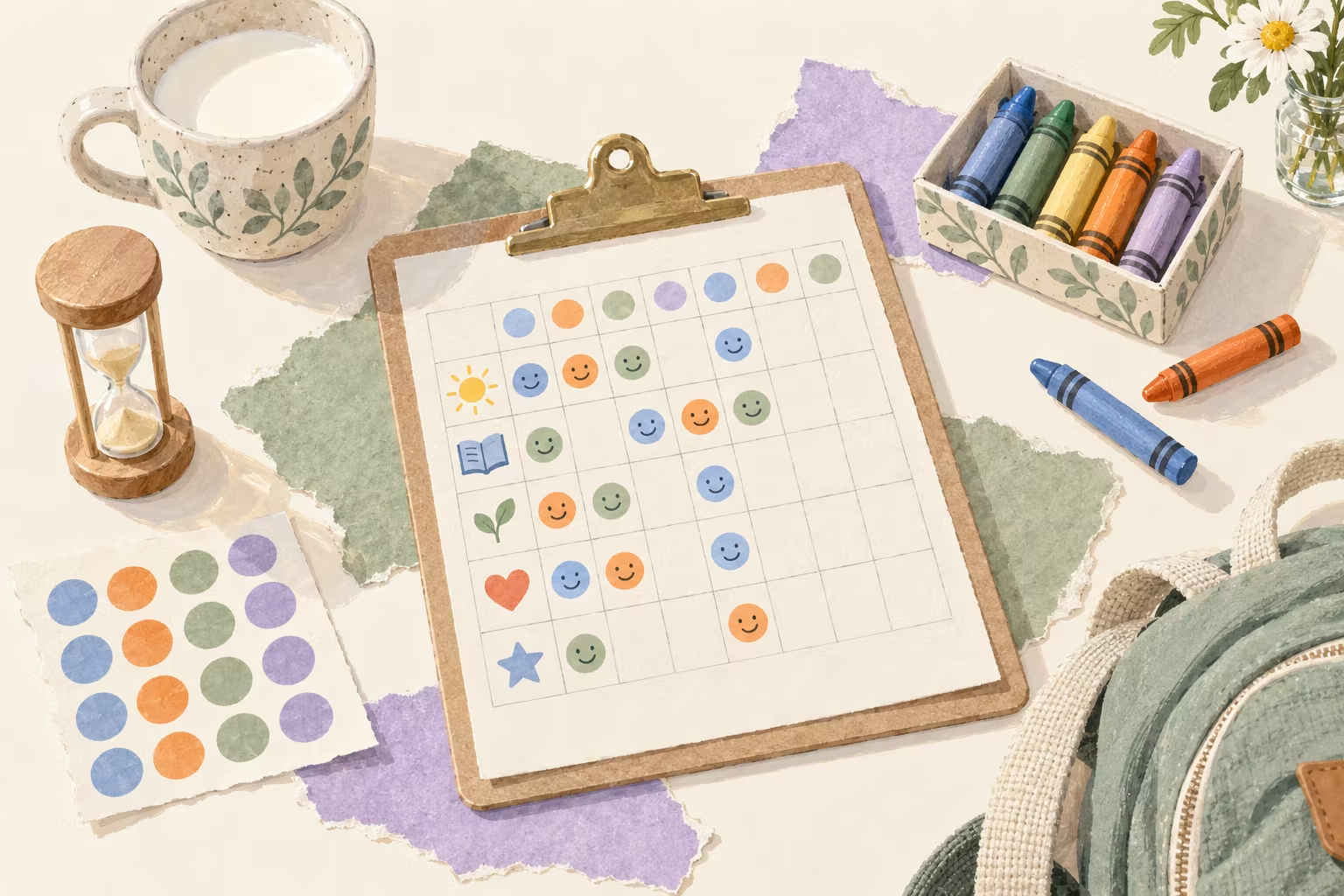
How do you use a behavior chart?
You use a behavior chart by choosing a few specific behaviors, rating each one at set times, and trading the marks for a reward your child helped choose. The chart works when the behaviors are small, the rating is calm and predictable, and the reward arrives when promised.
This guide walks through each step, then shows a full example week, how to fade the chart and when a different tool fits better. If you want to make one while you read, the free behavior chart maker has ready-made home, classroom and age-based charts you can edit and print on one page.
What is a behavior chart, and how is it different from a reward chart?
A behavior chart is a grid: two to five target behaviors down the side, and the days of the week, or the parts of a day, across the top. Each box gets a rating, such as a smiley face, a star, a number of points or a color. The marks add up toward a goal.
A reward chart is simpler. It counts stickers for one to three behaviors toward one prize and records only what went well. Use a reward chart for a toddler learning one new habit, such as using the potty. Use a behavior chart when you want to see how several behaviors go across the day, such as a calm morning but a hard hour after school.
Both are versions of what psychologists call a token economy: a mark now, exchanged later for something your child values.
Step 1: How do you pick behaviors for a behavior chart?
Start with the two to five behaviors that cause the most friction at home or at school. The CDC's advice on using rewards is to begin with a couple of specific behaviors, so if you are unsure, pick two and add more later.
Good chart behaviors are:
- Positive. Name what to do, so your child knows exactly what earns a mark.
- Specific. "Get dressed before the timer rings" is clear; "be good" is not.
- Within reach. Your child should manage it on most days with some effort.
- Observable. You can see it happen, so the rating is not a judgment of mood.
| Instead of |
Write |
| Don't hit |
Use kind hands |
| No yelling |
Use a calm voice |
| Stop dawdling in the morning |
Get ready before the bus timer |
| Don't argue about screens |
Turn off screens when the timer rings |
| No getting out of bed |
Stay in bed after lights out |
| Don't interrupt in class |
Raise my hand to talk |
Avoid putting every problem on the chart. A chart with eight behaviors is hard to rate and impossible to win, and the bad boxes start to outnumber the good ones.
Step 2: Smileys, stars, points or colors?
The rating should match your child's age and temperament.
- Smileys suit ages 2 to 5. A face reads faster than a number, and three faces (great, getting there, tough time) are enough.
- Stars suit ages 5 to 8, and any child who gets upset by a frowning face. There is only one mark: a star when it happened, an empty box when it did not.
- Points suit ages 9 and up, who like adding up a score. Two points for doing it, one with a reminder, zero for not this time. The American Academy of Pediatrics notes that older children respond better to points and contracts, while stars on a calendar suit early school-age children.
- Colors (green, yellow, red) are the classic behavior chart, and they are easy to read from across a room. That is also the problem: a red box reads as a public mark against your child, and a child who is "on red" by 10 a.m. may stop trying for the rest of the day.
If you like colors, keep the chart private, use them for the behavior and not the child ("getting dressed was a yellow" rather than "you were yellow"), and start every part of the day on a clean box. The AAP warns that penalties and demerits can be humiliating or discourage a child from even trying.
Step 3: How do you rate behavior fairly?
Fairness is what keeps a chart from turning into a fight. A few rules help:
- Rate at the same times every day. After the morning routine, after school and at bedtime is enough for most families. A fixed time stops ratings from becoming a reaction to the latest incident.
- Rate the behavior, not the child. "Kind hands at the park: great" is about one behavior. "You were bad today" is about the child.
- One box, one rating. A tough evening does not change the smiley your child already earned in the morning. The CDC is clear on this: never take away a reward your child has earned.
- Say it in one calm sentence. Pair a good box with specific praise: "You put your shoes on the first time I asked." Pair a tough box with a fresh start: "That was hard. Tomorrow morning is a new box."
- Let your child see it. Many children like to add the mark themselves. Older children can rate themselves first and compare with your rating, which turns the chart into a conversation.
Here is a short script for the bedtime check-in:
"Let's look at today. Kind hands: you shared the blocks with your brother, that's a smiley. Getting ready: it took two reminders, so that's a getting-there face. You have 6 points today, and you need 5 for an extra story. Pick the book."
Step 4: When should you give the reward?
The younger the child, the sooner the reward. The CDC notes that rewards right after a behavior work best for toddlers and preschoolers, and that you should reward often at first, then less often.
| Age |
Goal |
Reward timing |
Reward ideas |
| 2 to 4 |
A few smileys a day |
The same day |
An extra story, a sticker, a special job |
| 5 to 8 |
A daily goal, with a small weekly bonus |
Each evening, plus the weekend |
Choosing dinner, a board game with a parent |
| 9 to 12 |
A weekly points goal |
At the end of the week |
A later bedtime on Saturday, a friend over |
| Classroom |
A daily goal by part of the school day |
Each afternoon, often from home |
Free choice time, a class job |
Set the first goal so your child can reach it: about two thirds of the possible marks is a good start. Then keep it fixed until the end of the week. Raising the goal the moment your child gets close, sometimes called moving the goalposts, teaches a child that the chart cannot be won.
Let your child help choose the reward, and keep most rewards small, free and shared. Time with you, a choice or a small privilege usually works better than toys or food.
A worked week: Sam, age 6
Sam's parents started with three behaviors on a stars chart rated by part of the day: listen the first time, use kind words and get ready on time. The daily goal was 6 of 9 stars, with an extra bedtime story for each day the goal was met, and a trip to the park on Saturday for four good days.
- Monday: 7 stars. Morning was smooth, after school was hard. Story earned.
- Tuesday: 5 stars. No story, and no lecture: "Tomorrow is a new chart."
- Wednesday: 7 stars. Sam added his own stars, which he loved.
- Thursday: 6 stars. A rough evening, but the morning stars stayed.
- Friday: 8 stars. Fourth good day: the park trip was set for Saturday.
Two patterns stood out by Friday. Mornings were fine, so "get ready on time" could fade soon. After school was hard every day, which pointed to hunger and tiredness more than defiance, so a snack before homework went into the after school routine. That kind of pattern is what a behavior chart shows that a single sticker chart does not.
How long should you use a behavior chart, and how do you fade it?
Most families use a chart for a few weeks to a few months. The AAP suggests phasing a reward system out as your child internalizes the behavior; you will notice when your child loses interest or forgets to ask for points.
| Stage |
What changes |
| Weeks 1 and 2 |
Rate every part of the day, small rewards often |
| Weeks 3 and 4 |
Raise the goal a little, keep the reward |
| Weeks 5 and 6 |
Reward weekly instead of daily; drop a behavior that happens without reminders |
| After that |
Keep the praise, retire the chart or start one new behavior |
There is a reason to fade: in a review of 128 experiments, expected tangible rewards lowered later interest in activities people already enjoyed, while praise tended to raise it. A chart is a ramp for new or hard behaviors, not a permanent payment plan.
Do behavior charts work for kids with ADHD or autism?
They can be useful, as part of a plan rather than on their own. This section is general information, not medical advice.
For ADHD, the best-studied version is the daily report card, a school behavior chart that the teacher fills in and sends home. In a randomized trial with children with ADHD in grades 1 to 6 who had an individualized education program, adding a daily report card reduced classroom rule violations and improved work completion compared with special education as usual. ADHD symptom ratings themselves did not change significantly, which is a useful reminder that a chart supports behavior, not the condition. The CDC lists behavioral classroom management and daily report cards among the strategies that help students with ADHD.
For children with ADHD, shorter rating periods often work better than one rating a day, and the reward needs to come quickly. Two or three behaviors are plenty.
For autistic children, reinforcement and visual supports are both on the list of 28 evidence-based practices from the National Clearinghouse on Autism Evidence and Practice. A chart with pictures, a clear start and finish and very few behaviors fits that well. Some autistic children find rating stressful or confusing, though, so follow your child's lead, and work with their therapist or teacher on which behaviors to target. A picture visual schedule is often a better first step than a rating chart.
If behavior is causing serious trouble at home or school, talk to your pediatrician or the school psychologist before building a chart around it.
How do you use a behavior chart in the classroom?
In a classroom, the same chart is rated for each part of the school day, Monday to Friday, usually with points. Teachers keep the goals few and the same all week, and many send the chart home each afternoon so the reward can come from home.
Keep individual charts private, in a folder or on the student's desk, not on a wall. Public clip charts and color charts put a child's worst moment on display for the whole class, which is the opposite of what a behavior chart is for. For whole-class goals, a shared target, such as a marble jar for the class, keeps the focus positive.
Token systems have a good track record in classrooms. A meta-analysis of 28 single-case classroom studies with 90 students found a large effect of token economies on behavior, slightly larger for students aged 6 to 15 than for ages 3 to 5. Most of those studies were small, so the size of the effect in your class may differ.
What are the most common behavior chart mistakes?
- Public charts and shaming. A chart on the fridge is fine when it shows progress. A chart that siblings, friends or classmates use to tease is not. Keep it private when ratings are low.
- Too many behaviors. More than five is hard to rate and hard to win. Start with two or three.
- Moving goalposts. Keep the goal fixed for the week, and raise it only at the weekly review.
- Taking marks away. Earned is earned. Handle serious misbehavior separately.
- Rewards that never arrive. A promised reward that slips teaches a child the chart does not matter. Choose rewards you can give on time.
- Rating mood instead of behavior. "Grumpy" is not a behavior. "Use a calm voice when you are upset" is.
- Never ending the chart. Fade it once the behavior sticks, and celebrate the day it comes down.
What does the research say, and what are its limits?
Token systems, daily report cards and praise-based parenting have decades of research behind them, mostly in classrooms and in programs run with trained parents or teachers. Much of it uses small single-case studies, and the children studied often had significant behavior problems. That means the research supports the method, but it cannot tell you how much one chart will change one child at home.
The advice on positive phrasing, fixed goals and private charts comes from that research and from pediatric guidance, not from one decisive study. Treat your chart as an experiment: run it for two weeks, look at the pattern and change one thing at a time.
Where to go next
Make your chart with the behavior chart maker, and pair it with a short list of positive house rules for kids so the expectations are written down. For a calmer start to the day, read the morning routine for kids guide. If you want to practice the behavior you are asking for yourself, the 30-day habit building plan gives you one small step a day, or you can build your own plan. More on how habits form is on the habit building topic hub.