After school routine · Ages 8–10
- 3:30
- 3:35
- 3:50
- 4:35
- 5:05
- 5:25
- 5:35
- 6:05
dailyhabitai.com/tools/after-school-routine/
 DailyHabitAI
AGES 5 TO 13 · TIMES ADD UP · PRINTABLE
Make an after school routine chart: pick ages 5–7, 8–10 or 11–13, set snack, play, homework, chore and screen times, then print it or save a PNG.
After school routine · Ages 8–10
dailyhabitai.com/tools/after-school-routine/
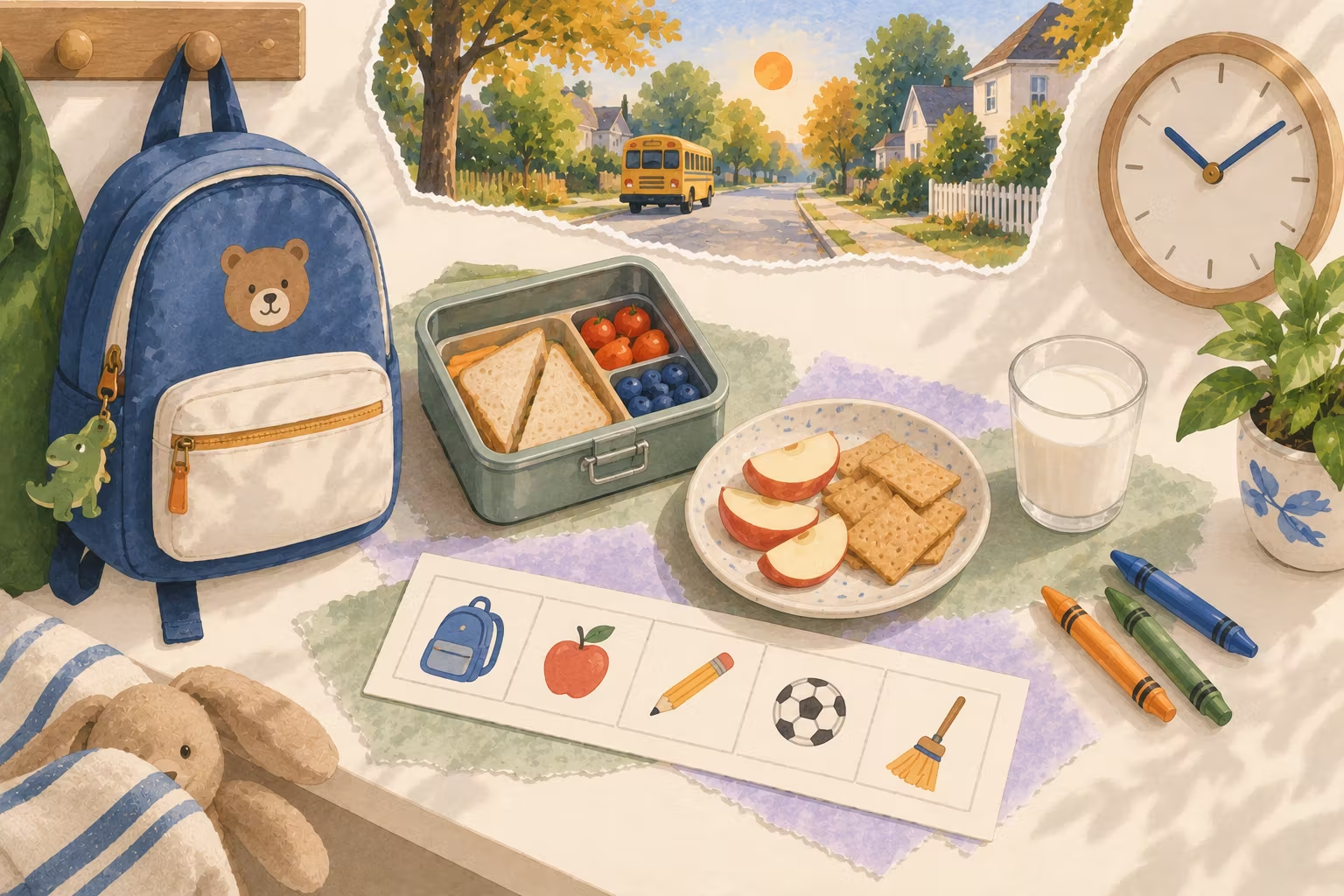
A good after school routine runs in the same order every day: unpack, snack and water, play or move, homework, a small chore, screens after the must-dos and packing for tomorrow. For ages 8 to 10 that takes about 2 to 3 hours. Set the minutes for each step, print the chart and let your child tick it.
Each chart above starts from one of these. The times assume the steps run back to back; change the minutes and the chart moves every time after it.
| Age | Routine | Takes | Homework · screens |
|---|---|---|---|
| Ages 5–7 | Bag and shoes away (5) → Wash hands (5) → Snack and water (15) → Play outside (45) → Reading or homework (15) → Tidy toys (10) → Screen time (30) → Help set the table (10) | 2 h 15 min, done by 5:30 | 15 min · 30 min |
| Ages 8–10 | Unpack bag, lunchbox to the sink (5) → Snack and water (15) → Play outside (45) → Homework (30) → Read (20) → One chore (10) → Screen time (30) → Pack bag for tomorrow (5) | 2 h 40 min, done by 6:10 | 30 min · 30 min |
| Ages 11–13 | Unpack, lunchbox to the sink (5) → Snack and water (15) → Practice, sport or a walk (45) → Check the planner, start homework (30) → Short break, no phone (10) → Finish homework (30) → One chore (15) → Phone or games (30) → Pack bag for tomorrow (5) | 3 h 5 min, done by 6:50 | 1 h · 30 min |
Ages 5–7: Short steps with pictures. Homework is often 10 to 20 minutes or a reading log at these grades. Ages 8–10: Pictures and words. About 30 to 50 minutes of homework is common in grades 3 to 5. Ages 11–13: Words are enough. Middle school homework is often 60 to 80 minutes, so plan a break.
Some children need to decompress first and do better with quiet time before play. Swap the steps with the ↑ buttons: the chart keeps the order you choose, and every time below it moves with the minutes.
| Grade | Homework a night (10-minute rule) | Plan for |
|---|---|---|
| K to 2 | About 10 to 20 minutes, often reading | A short reading or practice step before play ends |
| 3 to 5 | About 30 to 50 minutes | One focused block after the snack and play |
| 6 to 8 | About 60 to 80 minutes | Two blocks with a 10-minute break, planner check first |
Many school districts use the guideline of about 10 minutes of homework per grade level a night, which the NEA calls a good rule of thumb. In a review of US homework research, the link between homework and achievement was stronger in grades 7 to 12 than in kindergarten to grade 6, so short, regular homework matters more than long sessions for young children. For screens, the American Academy of Pediatrics asks families of school-age children to set consistent limits and make sure media does not take the place of sleep, physical activity and time together. If the chart shows more screen time than outside time, that is worth a look.
For older kids with several subjects, the homework planner keeps the week's assignments, due dates and tests on one page, and the pomodoro timer times the homework block with breaks.
Children who cannot read yet or find changes hard often do better with picture cards: the visual schedule shows each step big, with Now and Next. Bookend the day with the kids morning routine chart and the bedtime routine chart, and agree on screen rules once with the family screen time contract. Read more in morning routines for kids and screen time rules for kids. School is out? The kids summer schedule uses the same maker for a whole summer day.
Most children do better with a snack and some time to move first, then homework while they still have energy, usually 30 to 60 minutes after they get home. If your child tires quickly in the evening or has practice later, homework right after the snack can work better. Pick one order and keep it for a couple of weeks before you judge it.
From the moment kids walk in to free time or dinner, about 2 to 3 hours is typical: around 2 hours 15 minutes for ages 5 to 7 and 3 hours for ages 11 to 13 in the examples above. The chart adds up your minutes and shows when the routine ends.
For ages 2 to 5 the American Academy of Pediatrics suggests about 1 hour a day of high-quality programs. For older kids it asks families to set consistent limits so screens do not replace sleep, homework, activity or time together. Putting screens after homework and a chore is one simple rule many families use.
Unpack the bag and lunchbox, wash hands, snack and water, play or move, homework or reading, one chore, screen time and packing the bag for tomorrow. Add your own steps, like music practice or feeding the pet, from the ideas next to the chart.
Pick a design (crayon, calm or ink saver) and Letter or A4, then press Print. The chart prints on one page with times, pictures, minutes and Monday to Friday tick boxes. Save as image makes a phone-sized picture.
Yes, in this browser on this device: the age, steps, minutes, title and design. Nothing is sent to our server and there is no sign-up.
New plans, guides and app features, a few times a month at most.