Maya's morning
✂ Cut along the dashed lines
dailyhabitai.com/tools/visual-schedule/
 DailyHabitAI
PICTURE SCHEDULE · FIRST–THEN · PRINTABLE
Make a free visual schedule for kids: picture steps for morning, after school or bedtime, a First–Then board, cut-out cards or a strip to print, or a PNG.
0 of 7 done · Now: Wake up
✂ Cut along the dashed lines
dailyhabitai.com/tools/visual-schedule/
Tap a picture when that step is done. Saved on this device.
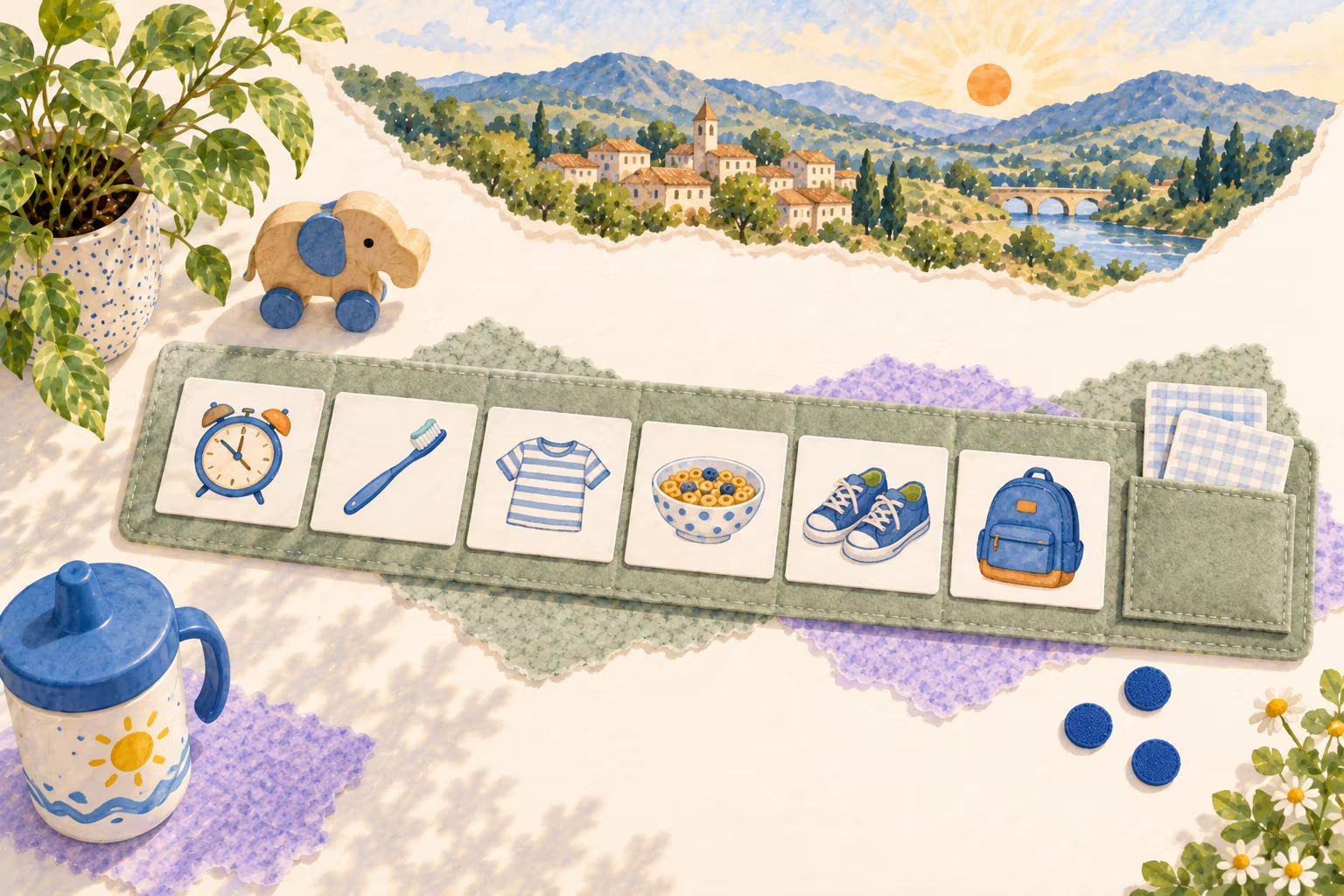
A visual schedule shows the steps of a routine or a day as pictures in order, so a child can see what is happening now and what comes next. Keep it to 3 to 8 pictures for young children, go through it together, and tick or move each picture when that step is done.
| Tool | What it shows | Best for |
|---|---|---|
| Visual schedule (strip) | The steps of a routine or a day as big numbered pictures, with Now and Next | Children who do not read yet; long or new routines; whole days at home or on holiday |
| Cut-out picture cards | The same pictures as cards with cut lines | Velcro strips and Done pockets, and schedules that change every day |
| First–Then board | Two big pictures: first this, then that | One hard moment, such as leaving the park or getting shoes on |
| Bedtime routine chart and morning routine chart | A checklist with optional times, daily or for the whole week | Children who can tick a box and follow the same routine every day |
| Reward chart | One to three behaviors and a sticker for each day | Practising one new behavior toward a reward |
Choose Whole day above for this 12-picture day for a toddler or preschooler. Swap the park for what your day really holds, and print it as cut-out cards so you can change the order each morning.
Parents of toddlers and preschoolers, teachers, and many families of autistic children, children with ADHD or children who find changes hard. A 2015 review of research found visual activity schedules to be an evidence-based practice for autistic people from preschool age to adulthood, and the 2020 report of the National Clearinghouse on Autism Evidence and Practice lists visual supports among its evidence-based practices. For any child who cannot read yet, the CDC suggests pictures on charts. A schedule is a way to show the day, not a treatment; if your child has a teacher or therapist who uses pictures, ask which ones they use so home and school match.
For the evening itself, the bedtime routine chart adds times and a weekly tick chart. Write down a few house rules for kids with pictures to go with the schedule, and see our guide to a morning routine for kids.
This page gives everyday parenting ideas, not medical or therapy advice.
A row or column of pictures that shows a routine in order, such as wake up, toilet, get dressed, breakfast and shoes on. Children look at it to see what is happening now and what comes next, instead of relying on spoken reminders.
Any child who does not read yet, from toddlers up, and many older children who like to see the plan. They are widely used with autistic children: a 2015 review of studies found visual activity schedules to be an evidence-based practice for autistic people. They are a planning aid, not a treatment.
A two-picture schedule: first the thing that needs doing, then the thing that comes next, often something your child enjoys, such as "First shoes on, then park." It keeps a single transition simple. Pick First–Then above and reorder the steps to change the two pictures.
For toddlers, 2 to 4; for preschoolers, about 4 to 6; school-age children can follow 6 to 10. Split a long day into parts, such as a morning schedule and an after-school schedule, rather than one long strip.
Print the cut-out cards, laminate them and put a dot of velcro on the back of each. Stick them in order on a strip, and when a step is done, your child moves the card to a Done envelope or turns it over. Print two sets if you use the same picture in several routines.
A routine chart is a checklist you tick every day, often with times, like the bedtime routine chart. A visual schedule is the picture sequence itself: one picture per step, big enough to point at, with Now and Next, and cards your child can move. Many families use both.
Yes, in this browser on this device, including which steps are done today. Nothing is sent to our server and there is no sign-up. Tap Clear ticks to start the routine again tomorrow.
New plans, guides and app features, a few times a month at most.