My reward chart
| I can… | Mon | Tue | Wed | Thu | Fri | Sat | Sun |
|---|---|---|---|---|---|---|---|
When I reach 20 stickers: A trip to the park
dailyhabitai.com/tools/reward-chart/
 DailyHabitAI
STICKER CHART · 5 DESIGNS · PRINTABLE
Make a free reward chart for kids: add behaviors, tap to add stickers, set a goal and a reward, pick one of 5 designs, then print it or save an image.
8 of 20 stickers · 12 to go for a trip to the park
My reward chart
| I can… | Mon | Tue | Wed | Thu | Fri | Sat | Sun |
|---|---|---|---|---|---|---|---|
When I reach 20 stickers: A trip to the park
dailyhabitai.com/tools/reward-chart/
Up to 5. Write what to do, not what to stop: “Use a kind voice”, not “No shouting”.
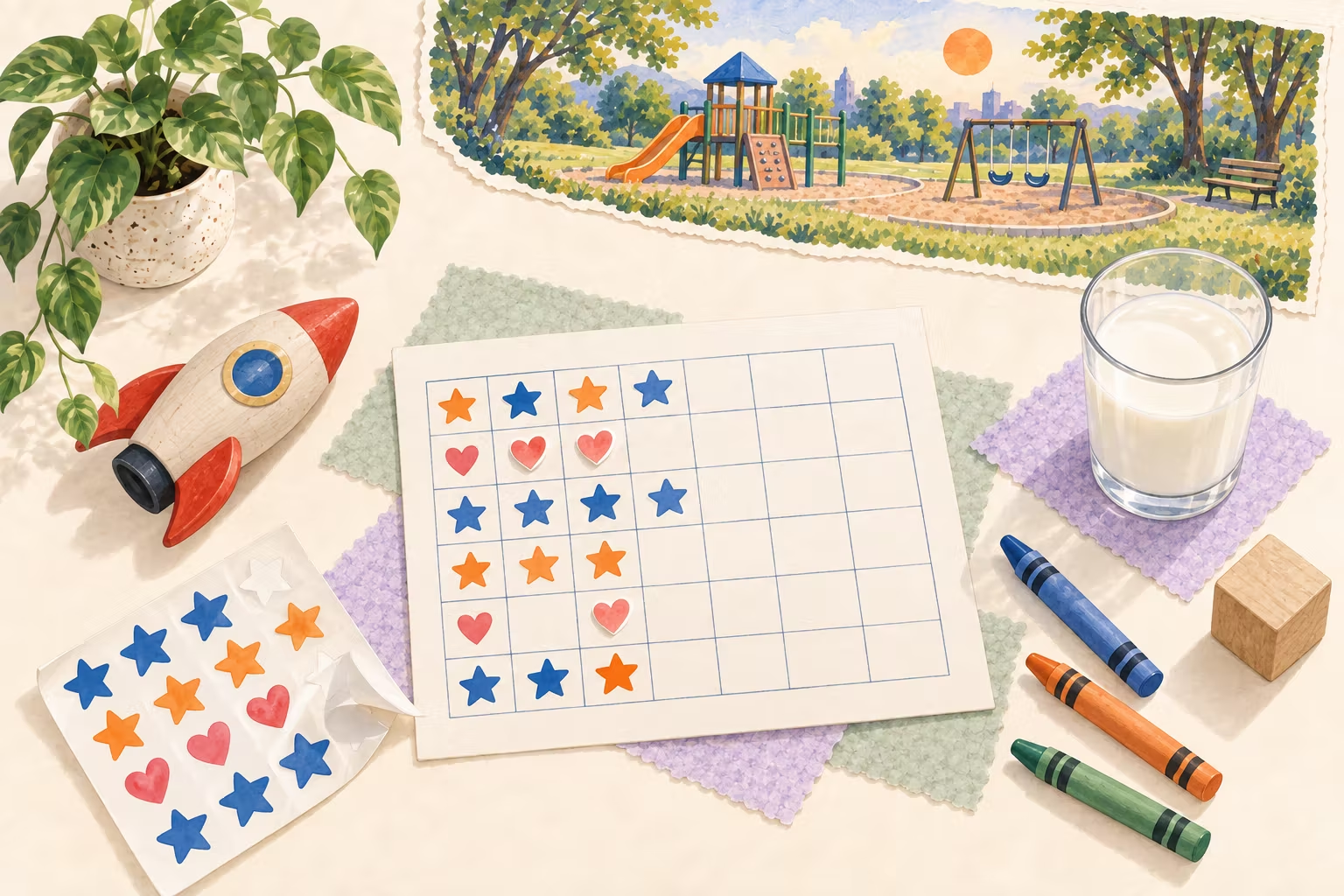
A reward chart, or sticker chart, lists one to three behaviors your child is working on, written as what to do, with a box for each day. Add a sticker right after the behavior, agree on a small reward for a set number of stickers, like a park trip, and phase the chart out once the habit sticks.
Seeing progress helps too: in a review of 138 studies, recording progress toward a goal improved the chance of reaching it, especially when it was written down or displayed. Put the chart where your child can see it, such as the fridge or their bedroom door.
| Age | Behaviors that work well on a chart | Stickers to the reward |
|---|---|---|
| 2 to 4 | Brush teeth morning and night, Use the potty, Put toys back in the box, Stay in bed after lights out, Wash hands before meals, Say please and thank you | 3 to 5, or a small reward each day |
| 5 to 7 | Get dressed by myself, Pack my school bag, Use a kind voice, Read for 10 minutes, Clear my plate after dinner, Get ready for bed on time | 10 to 20 over a week |
| 8 to 11 | Do homework before screens, Practice my instrument, Feed the pet, Put laundry in the hamper, Get up with the first alarm, Keep my room tidy | 20 to 30, or points toward a bigger goal |
For very young children, shorter is better: a reward at the end of the day keeps the link between the behavior and the prize clear. The AAP notes that stars and stickers suit early school-age children, while older kids often prefer points and a simple written agreement.
Small, frequent and mostly not food or money. Good choices are time together and small privileges:
Praise matters as much as the prize. The CDC calls attention and praise free and often more powerful than material rewards, and parent training programs that build positive time with a child show larger effects on behavior. Across 128 experiments, expected tangible rewards reduced interest in activities people already enjoyed, while praise tended to increase it, so keep charts for new or hard behaviors rather than things your child already loves doing.
Most charts stall for one of four reasons: the behavior is too big (split “clean your room” into “put toys in the box”), the reward is too far away (lower the goal or add a daily mini reward), stickers come late (add them on the spot) or the chart has become a punishment tool. Change one thing at a time. For routines rather than single behaviors, a picture morning routine chart or bedtime routine chart often works better, and for regular jobs around the house use the chore chart maker. For a calm start to the day, read our morning routine for kids guide.
This page gives everyday parenting ideas, not medical or psychological advice. If behavior worries you, talk to your pediatrician.
You write the behavior you want to see, your child gets a sticker in the box each time it happens, and a set number of stickers earns a reward you agreed on in advance. The sticker is the immediate reward and the prize at the goal line keeps it interesting.
Small, non-food rewards your child helped choose: extra story time, picking dinner, a trip to the park, baking together or a later bedtime on Friday. Time with you often works better than toys, and praise alongside each sticker matters as much as the prize.
Few enough that your child reaches it while they still care. Toddlers and preschoolers do best with a reward after 3 to 5 stickers or at the end of each day; school-age children can work toward 10 to 20 over a week or two. Use the 10, 20 or 30-box goal line for longer goals.
Sticker charts suit roughly ages 3 to 8, when stars and stickers feel like a reward in themselves. For older children, the AAP suggests points and simple agreements instead, which this chart can do too: switch to the goal line and write a points goal.
No. The CDC advises never taking away a reward your child has earned, and the AAP recommends avoiding penalties and demerits, which can discourage a child from trying at all. Deal with misbehavior separately and keep the chart for what went well.
When the behavior happens most days without reminders, or when your child stops asking about stickers. Fade it gradually: reward every other time, then once a week, then just praise. If the chart stops working sooner, change the behavior or the reward instead of adding rules.
People use the names for the same thing. Some behavior charts also record bad days or use color levels; a reward chart records only what went well, which is what the CDC and AAP guidance recommends.
Yes, in this browser on this device, including the stickers, so your child can add more tomorrow. Nothing is sent to our server and there is no sign-up. Print it or save an image to keep a copy.
New plans, guides and app features, a few times a month at most.