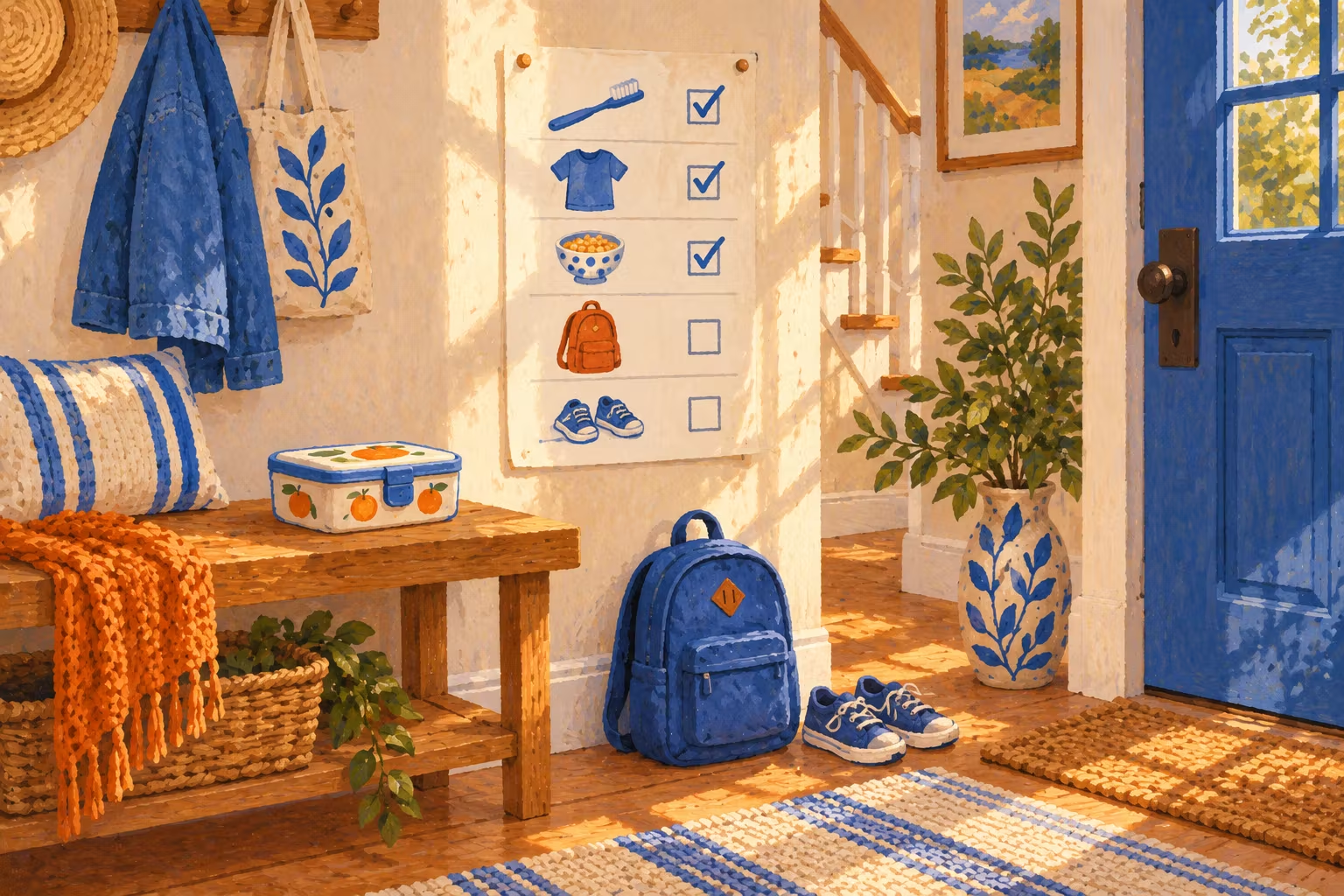
What is a good morning routine for kids on school days?
A good morning routine for kids is a short, fixed list of steps done in the same order every school day, shown on a picture chart the child can follow. For most families that means wake up, bathroom, get dressed, breakfast, brush teeth, and shoes and bag by the door. Much of the work happens the night before.
The goal is fewer reminders from you, not a perfect morning. When the steps stay the same and the chart does the reminding, kids can take on more of the routine themselves, at a pace that fits their age.
Why do picture charts and fixed steps help?
Mornings get tense when every step needs a new instruction. "Did you brush your teeth? Where are your shoes? Why are you still in pajamas?" A chart turns those questions into one: "What's next on your chart?"
A fixed order also cuts down on decisions. When breakfast always comes after getting dressed, nobody has to negotiate it. Pictures matter for younger kids who cannot read yet, and many older kids still like a quick visual they can check at a glance.
You can make a chart in a few minutes with the printable morning routine chart. Pick the steps, choose pictures, and print one for each child.
How do you set up a kids morning routine step by step?
- Work backward from the time you leave. If the bus comes at 7:45, write that down first, then fit each step before it with a little slack.
- Choose four to eight steps. Fewer for younger kids, more for older ones. Keep each step to one clear action.
- Put the steps in the order that fits your home. Many families put getting dressed before breakfast so nobody lingers at the table in pajamas.
- Make the chart with your child. Let them choose pictures or colors. A chart they helped build feels like theirs, not just yours.
- Hang it where the routine happens. Eye level in the bedroom or near the kitchen, not on a fridge covered in papers.
- Practice on a weekend. Walk through it once with no time pressure so the first school day is not the first try.
- Move prep to the evening. Anything that can happen the night before should.
- Review after a week. Notice where mornings stall and change one step, not the whole routine.
What should a morning routine look like by age?
These are starting points. Every child is different, so adjust the number of steps and the amount of help to fit yours.
Ages 3 to 5: preschool and kindergarten
Keep it to four or five steps with a picture for each. Expect to do most steps together, with your child doing parts on their own, like pulling on socks or choosing between two shirts.
- Wake up and use the bathroom
- Get dressed (clothes laid out the night before)
- Eat breakfast
- Brush teeth with a grown-up
- Shoes and coat on
A song or the same short playlist each morning can act as a timer that young kids understand.
Ages 6 to 9: early elementary
Kids this age can often follow a picture chart with less help. Add one or two small jobs and let them check off each step.
- Wake up and use the bathroom
- Get dressed
- Make the bed (a quick pull-up of the covers counts)
- Eat breakfast and put the bowl in the sink
- Brush teeth and hair
- Check the backpack against a small picture list
- Shoes on, bag by the door
Ages 10 to 13: upper elementary and middle school
Older kids can own most of the routine. Swap pictures for a short written list if they prefer, and let them set their own alarm.
- Alarm, then out of bed
- Shower or wash up
- Get dressed
- Breakfast and clean up their own dishes
- Brush teeth
- Pack lunch or check it is packed
- Check the day's schedule (sports gear, library book, permission slip)
- Out the door on time
At this age, the chart is less about reminders and more about handing over responsibility. Agree on the list together and step back.
| Age band |
Steps |
Chart style |
Your role |
| 3 to 5 |
4 to 5 |
Pictures only |
Do steps together |
| 6 to 9 |
5 to 7 |
Pictures with short labels |
Check in, prompt with "what's next?" |
| 10 to 13 |
6 to 8 |
Short written list |
Agree on the plan, then step back |
How do you make a picture chart that kids actually use?
A chart only helps if your child looks at it. A few small choices make that much more likely.
- One picture per step. A toothbrush for teeth, a shirt for getting dressed, a bowl for breakfast. Skip decorative extras that compete for attention.
- Left to right, or top to bottom. Keep the order the same as the real routine so the chart reads like a path.
- A way to mark progress. Checkboxes, a clothespin that moves down the list, or magnets that slide from "to do" to "done" all work. Moving something by hand is part of the fun for younger kids.
- A clear finish line. End with a picture of the door, the bus or a favorite small reward, so kids can see what they are working toward.
- Laminate it or slide it into a sheet protector. A dry-erase marker lets you reuse the same chart every day.
What if your child resists the routine?
Some pushback is normal, especially in the first week. Keep your response calm and boring. Point to the chart, say "What's next?" and wait a moment before helping. Avoid adding new rules in the middle of a hard morning.
If one step causes a fight every day, look at that step on its own. Maybe the clothes are uncomfortable, breakfast comes too early for their appetite, or brushing teeth needs a different toothpaste. Changing one small thing often solves more than a stricter routine would.
What should you do the night before?
Most smooth mornings are set up the evening before. A five-minute prep routine after dinner or before bath time removes the biggest morning decisions.
- Lay out clothes, including socks and shoes. For younger kids, let them choose between two outfits.
- Pack the backpack and put it by the door. Check for forms, homework and gear.
- Plan breakfast. Put bowls and cereal out, or decide which of two options it will be.
- Charge devices outside the bedroom if your older child has one.
- Keep bedtime steady. A consistent evening routine makes the wake-up easier to predict. The guide on how to build a bedtime routine has ideas you can adapt for the whole family.
How much sleep do school-age kids need?
Sleep sets up the morning. The American Academy of Sleep Medicine recommends, on a regular basis, 10 to 13 hours per 24 hours (including naps) for children ages 3 to 5, 9 to 12 hours for ages 6 to 12, and 8 to 10 hours for teenagers 13 to 18 (Paruthi et al., 2016).
To use this, count back from wake-up time. If your 8-year-old wakes at 6:45 a.m., a bedtime around 8:30 p.m. gives them about 10 hours. If your child regularly struggles to wake up, seems very sleepy during the day or snores loudly, talk to their pediatrician. This guide is about routine, not medical advice.
Which routine fits your family's situation?
| Your situation |
What to try |
| Busy mornings with two working parents |
Move everything possible to the evening, including breakfast setup, and split the steps: one adult handles breakfast, the other handles shoes and bags. |
| Low-energy or slow-waking kids |
Wake them 10 minutes earlier and put the gentlest steps first, like bathroom and dressing, before breakfast. |
| Restarting after summer or a holiday |
Practice the routine for two or three days before school starts and shift bedtime earlier in small steps. |
| Weekends |
Keep wake time roughly similar if you can, but drop the chart. It helps kids feel the difference between school days and free days. |
| Siblings of different ages |
Give each child their own chart. Let an older sibling help a younger one with one step, not the whole routine. |
For families with very young children, see the morning routine with toddlers example.
What does a full school morning look like?
Here is a realistic school day for a family with a 5-year-old and a 9-year-old. The bus leaves at 7:50 a.m.
The night before, 7:15 p.m.: Both kids lay out clothes. The 9-year-old packs their backpack and puts it by the door. A parent sets out bowls and cereal.
The morning:
- 6:50 Parent wakes both kids. Lights on, curtains open.
- 6:55 Bathroom. The 5-year-old goes first while the 9-year-old gets dressed.
- 7:05 The 5-year-old gets dressed with help. The 9-year-old pulls up their bed covers and checks it off.
- 7:15 Breakfast together. Bowls go in the sink after.
- 7:30 Teeth and hair. The 5-year-old brushes with a parent. The 9-year-old does it alone.
- 7:38 Shoes and coats. The 9-year-old checks the backpack picture list.
- 7:45 Out the door, with five minutes of slack.
The parent's main line all morning is "What's next on your chart?" instead of a string of reminders.
What are common mistakes with kids morning routines?
- Too many steps. A 12-step chart for a 5-year-old is overwhelming. Start small and add steps later.
- Leaving prep for the morning. Choosing clothes and finding shoes are the slowest parts. Do them the night before.
- Changing the order often. Kids rely on the sequence. Keep it the same for at least a couple of weeks.
- Building no slack. A routine that fits exactly into the available time fails at the first lost sock. Add five to ten minutes.
- Making the chart for them, not with them. Kids are more likely to use a chart they helped design.
- Using screens as the first step. A show before getting dressed tends to stall everything after it. If you use screens, put them at the end as a reward for being ready.
What does research say about kids' morning routines?
The clearest evidence here is about sleep, not the routine itself. The American Academy of Sleep Medicine's pediatric recommendations above come from an expert consensus process that reviewed the research on sleep duration in children and adolescents (Paruthi et al., 2016). A separate expert panel from the National Sleep Foundation reached similar ranges, for example 10 to 13 hours for preschoolers and 9 to 11 hours for school-aged children (Hirshkowitz et al., 2015). Both are ranges for typical, healthy kids. Your child's needs may sit at the higher or lower end.
The chart approach in this guide is practical, family-tested advice, not a research finding. There is no single study that shows one exact routine works best for every child. Start with a simple version, watch where mornings stall, and adjust.
Where should you go from here?
Make a chart tonight with the morning routine chart maker and practice it on the weekend. If you want a steadier morning for yourself as well, the 30-day morning routine plan walks you through one small change a day. You can also build your own morning plan or read more on the morning routine topic hub.