My behavior chart
Week of
| I can… | Mon | Tue | Wed | Thu | Fri | Sat | Sun |
|---|---|---|---|---|---|---|---|
- Great
- Getting there
- Tough time
When I get 35 points this week: Pick the movie for family night
dailyhabitai.com/tools/behavior-chart/
 DailyHabitAI
SMILEYS · STARS · POINTS · HOME AND CLASSROOM
Make a free behavior chart for kids: pick 2 to 5 behaviors, rate them with smileys, stars, points or colors by day or time of day, then print it.
My behavior chart
Week of
| I can… | Mon | Tue | Wed | Thu | Fri | Sat | Sun |
|---|---|---|---|---|---|---|---|
When I get 35 points this week: Pick the movie for family night
dailyhabitai.com/tools/behavior-chart/
2 to 5 behaviors. Tap a box to rate it; tap again to change it. Write what to do: “Use kind hands”, not “No hitting”.
About color charts: green, yellow and red are quick to read, but a red box can feel like a grade on your child. Keep the chart private, rate the behavior and not the child, and start every part of the day fresh. Smileys or stars work the same way without the traffic light.
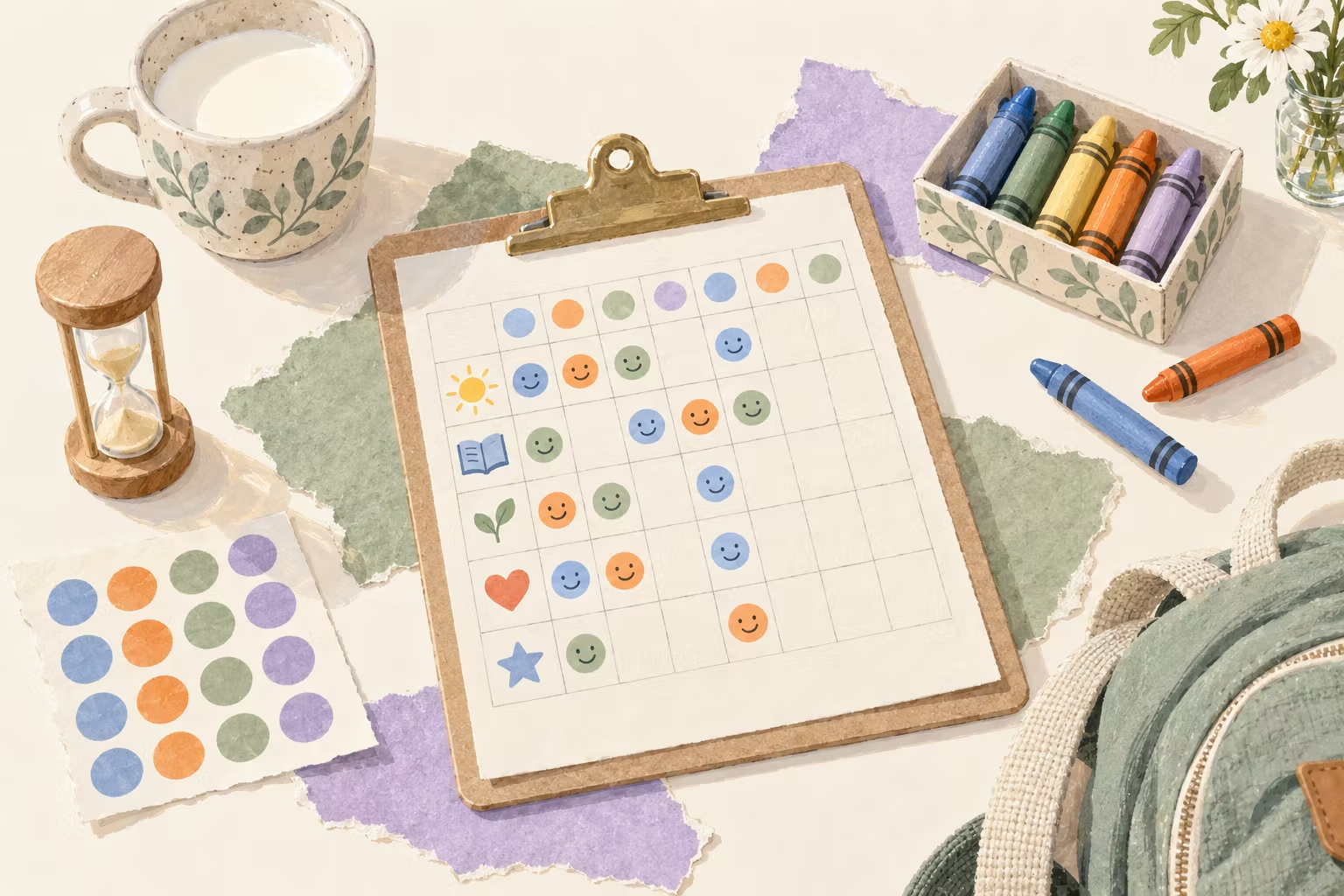
A behavior chart lists two to five behaviors your child is working on, written as what to do, and rates each one every day or each part of the day with a smiley, star, point or color. Add up the week, agree on a small reward for reaching the goal, and fade the chart once the behaviors stick.
The method is a small token economy: a mark for each behavior, traded for a reward. In a meta-analysis of 28 single-case classroom studies, token economies had a large effect on behavior, and slightly more for children aged 6 to 15 than for 3 to 5 year olds. Most of those studies were small, so treat the chart as a structure for praise, not a guarantee.
| Age or setting | Behaviors that work well | Rating and reward |
|---|---|---|
| Ages 2 to 4 | Use gentle hands, use my words, help pick up toys | Smileys, 2 or 3 behaviors, a small reward the same day |
| Ages 5 to 8 | Listen the first time, use kind words, get ready on time, help when asked | Stars by morning, after school and evening, a daily goal |
| Ages 9 to 12 | Homework done before screens, talk respectfully, phone in the kitchen at bedtime | Points, a weekly goal and a privilege your child helped choose |
| Classroom | Raise my hand to talk, stay in my seat during work time, follow directions, finish my work | Points by period on school days, sent home each afternoon |
The American Academy of Pediatrics notes that stars on a calendar suit early school-age children, while older children respond better to points and simple agreements. Whatever the age, the reward should be something your child cares about and helped pick.
| Rating | How it works | Best for |
|---|---|---|
| Smileys | Great, getting there or tough time (2, 1 or 0 points) | Toddlers and preschoolers, who read faces before numbers |
| Stars | A star when the behavior happens, an empty box when it does not | Ages 5 to 8, and any child who finds a “tough” face upsetting |
| Points | 2 for did it, 1 with a reminder, 0 for not this time | Ages 9 and up, and classrooms with a daily goal |
| Colors | Green, yellow or red for each box | Quick to read, but use with care |
Green, yellow and red are the classic behavior chart colors, and they are easy to read from across a room. The downside is that red reads as a public mark against the child. The AAP warns that penalties and demerits can be humiliating or discourage a child from even trying. If you use colors, keep the chart private, rate the behavior rather than the child, and start each part of the day on a clean box.
At home, a week chart with one box per day is usually enough: you rate each behavior at bedtime and talk about the day together. In a classroom, teachers often rate the same few goals for each part of the school day and send the chart home, a method researchers call a daily report card. In a randomized trial with about 60 children with ADHD in grades 1 to 6 who had an individualized education program, adding a daily report card reduced classroom rule violations and improved work completion compared with their usual special education program alone. The CDC lists a daily report card as one way to encourage positive behavior at school.
Use Parts of the day with School days for the classroom version: each tab is one school day, and the weekly score adds up on its own.
A behavior chart rates a few behaviors every day, so you can see patterns such as a hard after-school stretch. A reward chart with stickers counts stickers toward one prize and only records what went well, which suits younger children working on one new habit. For routines with many steps, like getting ready for school, a morning routine chart or a picture visual schedule often works better than rating behavior.
Most charts stall for one of four reasons: too many behaviors at once, a goal that moves every time your child gets close, a reward that is too far away, or a chart that has turned into a list of failures on the fridge. Cut back to two behaviors, keep the goal fixed for the week and add a small daily reward. Pair the chart with a short list of positive house rules for kids so the expectations are written down, and use the chore chart maker for jobs rather than behavior. Our guide on how to use a behavior chart covers fair rating, fading the chart and ADHD in more depth.
This page gives everyday parenting and classroom ideas, not medical or psychological advice. If your child’s behavior worries you, or you think about ADHD or autism, talk to your pediatrician or the school psychologist.
A behavior chart is a grid of a few target behaviors and the days of the week, or the parts of a day, where you mark how each behavior went. The marks add up to a goal, often with a small reward. It works like a token economy: a mark now, a reward later.
Two to five specific, positive behaviors your child can do most days, such as “Listen the first time”, “Use kind hands” or “Get into bed at bedtime”. Phrase each one as what to do, not what to stop, and start with the behavior that causes the most friction.
They are easy to read, but a red mark can feel like a public grade on your child, especially on a classroom wall. The AAP warns that penalties and demerits can be humiliating. If you use colors, keep the chart private and start each part of the day fresh; smileys or stars avoid the problem.
Pick the Classroom start: four goals such as raising a hand and finishing work, rated with points for each part of the school day, Monday to Friday. Teachers often send it home each afternoon so the reward can come from home; researchers call this a daily report card.
Daily report cards, a school version of a behavior chart, have research support for children with ADHD, and the CDC lists them as a classroom strategy. They work best as part of a plan with your child's teacher and pediatrician, not as a stand-alone fix.
Most families use one for a few weeks to a few months. Once a behavior happens most days without reminders, swap it for a new one or fade the chart: reward weekly instead of daily, then move to praise alone. The AAP suggests stopping when your child loses interest or forgets to ask about points.
No. The CDC advises never taking away a reward your child has earned. A tough moment gets a low rating for that box only, and the next box is a fresh start. Handle serious misbehavior separately so the chart stays about practice and progress.
Yes, in this browser on this device, including every rating, so you can keep filling it in all week. Nothing is sent to our server and there is no sign-up. Print it or save an image to keep a copy.
New plans, guides and app features, a few times a month at most.