
FREE PRINTABLE · AGES 2 TO 12
Printable bedtime routine chart for kids
Make a printable bedtime routine chart for toddlers and kids: pick the steps, add a name and print a picture checklist or a weekly chart in a minute.
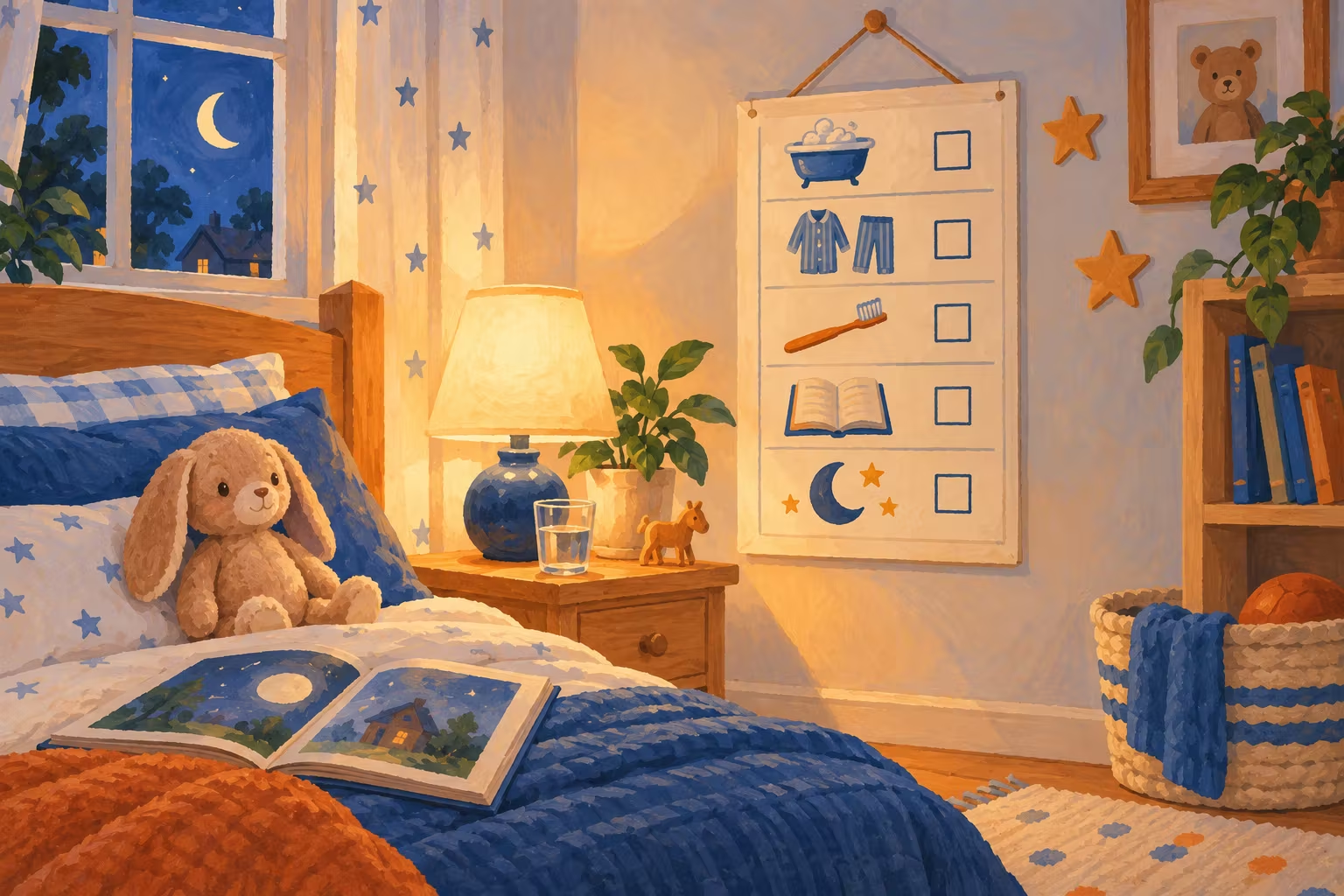
My bedtime routine
The short answer
A good bedtime routine chart has 4 to 7 calm steps in the same order every night, such as bath, pajamas, brush teeth, story and lights out, with a picture for each step. In a large study of young children, a consistent bedtime routine was linked with falling asleep faster and sleeping longer.
Sample bedtime routines by age
| Age | Bedtime routine | Notes |
|---|---|---|
| Ages 2 to 3 | Bath or shower → Put on pajamas → Brush teeth → Story time → Lights out | 4 to 5 picture steps. Recommended sleep: 11 to 14 hours in 24 hours at ages 1 to 2, 10 to 13 at ages 3 to 5. |
| Ages 4 to 5 | Bath or shower → Put on pajamas → Use the toilet → Brush teeth → Story time → Hugs goodnight → Lights out | 5 to 7 steps with pictures. Recommended sleep: 10 to 13 hours in 24 hours, naps included. |
| Ages 6 to 12 | Screens off → Bath or shower → Put on pajamas → Lay out tomorrow's clothes → Pack the school bag → Brush teeth → Read on my own → Lights out | 6 to 8 steps, pictures and words. Recommended sleep: 9 to 12 hours. |
How to make a bedtime routine chart work
- Same steps, same order, every night. Predictability is what makes a routine calming.
- Start 20 to 45 minutes before lights out. Long enough to wind down, short enough to keep on busy nights.
- Move screens early. Put "screens off" near the start so the last part of the evening is quiet and dim.
- End with connection. A story, song or chat about the day makes the last step something to look forward to.
- Let your child tick the steps. Use a dry-erase sleeve so the chart lasts.
Why a consistent bedtime routine helps
In a study of more than 10,000 young children in 13 countries, a consistent bedtime routine was linked with earlier bedtimes, falling asleep faster, fewer night wakings and longer sleep, and the more nights a week families kept the routine, the better the outcomes. It is an association, not proof, but it matches what sleep experts recommend. Set the time with recommended sleep in mind: 10 to 13 hours in 24 hours for ages 3 to 5 and 9 to 12 hours for ages 6 to 12.
Related charts and guides
Pair it with the kids morning routine chart and the chore chart maker. For your own evenings, see how to build a bedtime routine, the sleep calculator and the 30-day evening routine plan.
Frequently asked questions
What should a kids bedtime routine include?
A wind-down step (bath or quiet play), getting ready (pajamas, toilet, teeth), a connection step (story, song or chat) and lights out. Keep screens out of the last part of the routine.
How long should a bedtime routine be?
About 20 to 45 minutes for most young children. Long enough to wind down, short enough to repeat every night, including busy ones.
What time should kids go to bed?
Count back from wake-up time using recommended sleep: 10 to 13 hours in 24 hours for ages 3 to 5 (naps included) and 9 to 12 hours for ages 6 to 12. A child waking at 7:00 a.m. at age 7 might be asleep around 7:30 to 8:30 p.m.
Does a bedtime chart help toddlers?
Pictures help young children know what comes next, which can make transitions easier. Keep it to 4 or 5 steps and go through it together each night.
Sources and evidence
- Mindell et al. (2015): Bedtime routines for young children, a dose-dependent association with sleep outcomes — In mothers of 10,085 children aged 0 to 5 in 13 countries, a consistent bedtime routine was associated with earlier bedtimes, falling asleep faster, fewer night wakings and longer sleep, with better outcomes on more nights with a routine.
- Paruthi et al. (2016): Recommended amount of sleep for pediatric populations (AASM consensus) — Recommended sleep per 24 hours: 11 to 14 hours at ages 1 to 2, 10 to 13 hours at 3 to 5 and 9 to 12 hours at 6 to 12.