What is a keystone habit?
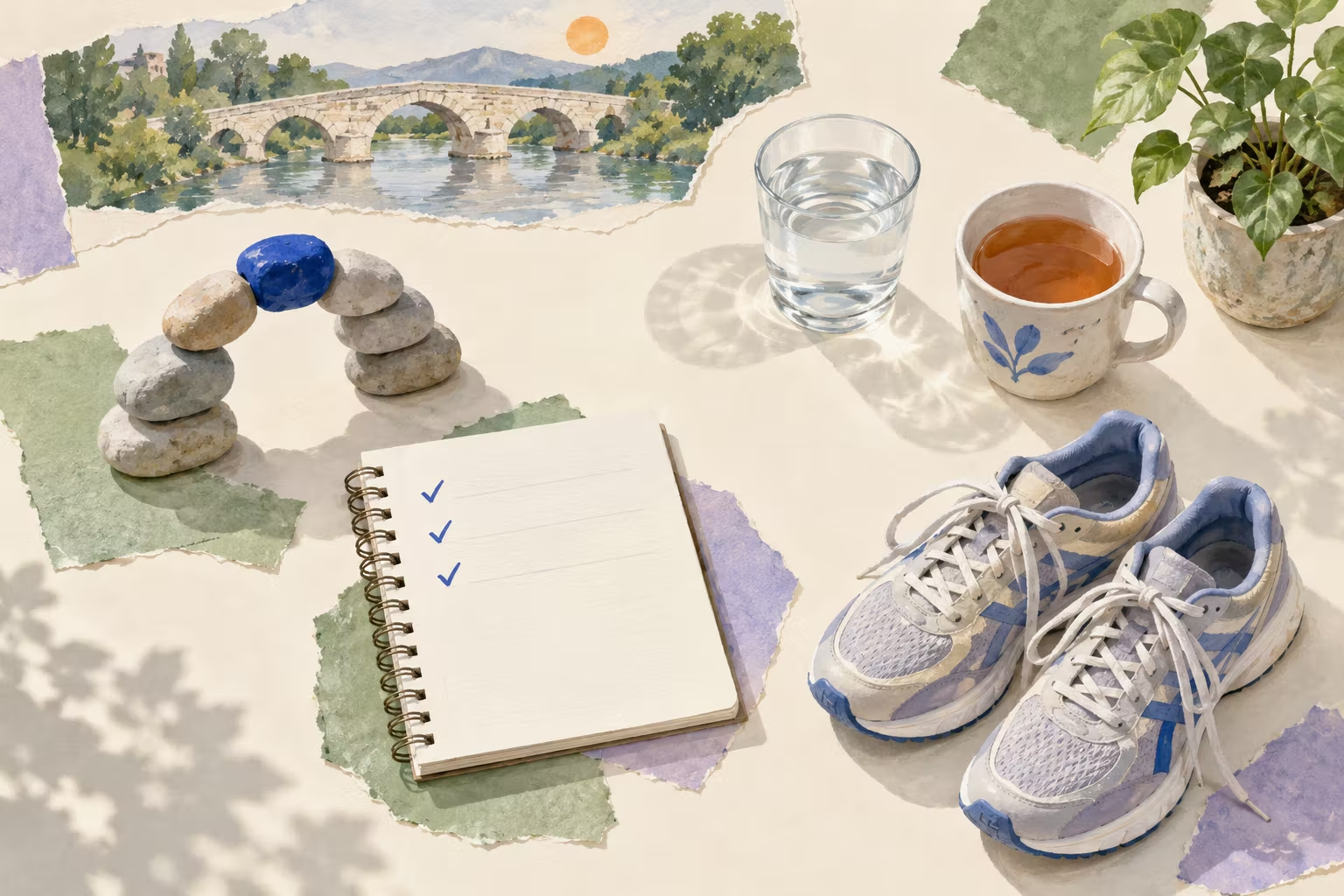
A keystone habit is a habit that tends to make other habits easier. Change it, and a few other things often shift with it: you start a walking habit and find yourself going to bed earlier, or you plan tomorrow each evening and stop opening email first thing. The name comes from the keystone in an arch, the wedge-shaped stone at the top that holds the other stones in place.
The idea is useful because it changes the question you ask. Instead of "how do I fix everything?", you ask "which one change would make the rest easier?" That is a much easier list to work through.
Where does the idea of keystone habits come from?
The term was made popular by Charles Duhigg in The Power of Habit (2012). He describes keystone habits as small changes that start a chain reaction, often by creating early "small wins" and new routines that other habits can grow from. His best-known story is about Paul O'Neill, who took over the aluminum company Alcoa and made worker safety the one priority everyone had to report on. To improve safety, teams had to change how they communicated and worked, and Duhigg argues that those changes spread through the company.
For individuals, Duhigg points to habits like regular exercise, eating dinner together as a family, making your bed and keeping a food journal. These are good examples to think with. They are not proven rules, and a habit that is keystone for one person can be just another habit for someone else.
Do keystone habits really work? What the research shows
The research on keystone habits is thinner than the popularity of the idea suggests. Researchers usually study it under a different name, behavioral "spillover": a change in one behavior that leads to a change in another. Here is what the evidence supports, and where it stops.
- Exercise and self-control (small study). In a 2006 study by Oaten and Cheng, 24 sedentary university students went through a 2-month control phase and then a 2-month program of regular exercise. During the exercise phase they reported smoking, drinking alcohol and caffeine less, and eating more healthily, doing more household chores, keeping more commitments, monitoring their spending more and studying better. That is the classic keystone pattern. But the group was small, everyone knew they were in an exercise program, and most of the changes were self-reported.
- Exercise motivation and eating (weight-control trial). In a 1-year weight-control trial with 239 overweight and obese women, women whose motivation for exercise became more their own also showed better self-regulation of their eating. The researchers called it motivational "spill-over". It is a link inside a trial, not proof that exercise caused the better eating.
- Spillover can go both ways. A review of behavioral spillover by Dolan and Galizzi found that one change can encourage related changes, but it can also license the opposite: "I went to the gym, so I have earned the cake." Whether a habit spreads depends on how you think about it, not only on the habit itself.
- Tracking is the best-tested candidate. In a meta-analysis of 138 studies, monitoring progress toward a goal improved the chance of reaching it, more so when progress was recorded physically or shared. That makes "write it down" one of the few keystone candidates with strong experimental support.
The fair summary: some habits seem to pull others along, especially exercise, sleep and tracking, but the effect is modest and not automatic. Treat a keystone habit as a smart place to start, then watch what actually changes.
Keystone habit examples by life area
Each example below has a small first step you could take this week. Pick the area where you feel stuck, not the one that sounds most impressive.
| Life area |
Keystone habit |
Why it may pull other habits along |
Small first step |
| Movement |
A daily walk or regular exercise |
People who start exercising often report eating, sleeping and drinking differently too |
Walk for 10 minutes after lunch |
| Sleep |
The same wake-up time every day |
A steady morning makes bedtime, breakfast and the first hour of the day easier to plan |
Set one alarm for the same time, weekends included |
| Evening |
Phone charges outside the bedroom |
Less scrolling in bed, an earlier bedtime and a calmer first minute of the morning |
Put the charger in the kitchen tonight |
| Food |
Planning meals for the week |
Fewer takeout nights, less waste and a cheaper grocery run |
Write three dinners on a sticky note on Sunday |
| Money |
Checking spending once a week |
You notice small leaks, and saving and planning follow |
Open your banking app every Sunday at 6 pm |
| Work |
Planning tomorrow before you stop |
The next morning starts with the important task, not email |
Write tomorrow's first task before you close the laptop |
| Home |
A 10-minute evening reset |
A tidy kitchen makes breakfast, packing lunch and leaving on time easier |
Set a 10-minute timer after dinner |
| Family |
Eating one meal together |
A fixed time to talk, slower meals and fewer screens at the table |
One phone-free dinner a week |
| Mind |
Writing a few lines each night |
You notice patterns in mood, sleep and spending |
Write one sentence before you turn off the light |
| Tracking |
Marking a habit tracker |
Seeing the pattern makes the next choice more deliberate |
Tick one box each day for a week |
Many of these overlap, and that is the point. A phone outside the bedroom helps sleep, which helps the morning, which helps the walk.
How do you find your keystone habit?
- List what you do now. Write your ordinary day in order and mark each habit +, – or =. The free habit scorecard does this with a filled example and picks the first – habit of your day for you.
- Look for clusters. Circle the – habits that seem connected. Late scrolling, a rushed morning and a skipped breakfast are often one problem, not three.
- Ask the keystone question. Which one change would make two or three of the others easier? Usually it is a habit near the start of the chain: the time you go to bed, where your phone sleeps, whether tomorrow is planned.
- Shrink it to a first step you can do on a bad day. A keystone habit still has to be small. The micro habits guide has 60 two-minute versions.
- Tie it to a moment you already have. "After I finish dinner, I put my phone on the kitchen charger." The habit stacking builder writes this sentence with you.
- Track it for a month and watch the spillover. Mark the keystone habit on a 30-day habit tracker and add a note when something else changes on its own. If nothing else moves after a few weeks, the habit is still worth keeping, but it may not be your keystone.
A worked example
Sam's scorecard has five – habits: checking the phone in bed, breakfast while scrolling, opening email before planning, a candy bar at 3 pm and TV with the phone in hand. Looking at them together, three are about the phone and two are about being tired.
Sam picks one change: the phone charges in the kitchen from 10 pm. The first step is just moving the charger. After two weeks, Sam is reading in bed instead of scrolling, falls asleep earlier, and the first ten minutes of the morning are calmer because the phone is in another room. The 3 pm candy bar has not changed, and that is fine. It becomes the next habit to work on.
Keystone habits, small habits and habit stacking: how they fit together
These ideas answer different questions, so you can use all three:
- Keystone habits answer which habit to change first: the one most likely to make others easier.
- Micro habits (also called tiny habits) answer how big the first step should be: small enough to do in two minutes on your worst day. See the 2-minute rule.
- Habit stacking answers when: right after something you already do every day. See habit stacking examples that fit real life.
How long it takes for the new habit to feel automatic varies a lot. In a study of 96 adults, it ranged from 18 to 254 days, so give your keystone at least a month before you judge it. For the full method, read how to build a habit.
Which keystone habit fits your situation?
- You are busy and tired. Start with sleep. A fixed wake-up time or a phone that charges outside the bedroom costs no extra time, and most other habits are harder on a short night. The guide on how to fix your sleep schedule has the steps.
- Your days feel scattered. Plan tomorrow before you stop work: one important task written on a sticky note. A shutdown routine turns this into a 10-minute habit.
- You want to feel healthier but do not know where to start. A short daily walk is the easiest movement habit to keep, and it is the one most often linked with other changes. See is walking enough exercise.
- Money feels out of control. Check your spending once a week, at the same time. Tracking is the best-tested keystone candidate.
- You are restarting after a bad stretch. Pick the habit you kept the longest last time and shrink it. Momentum matters more than the perfect choice.
Common mistakes with keystone habits
- Choosing five keystones. By definition you only need one. Add a second when the first feels easy.
- Picking the most impressive habit. Running every morning sounds like a keystone, but a habit you keep for three days changes nothing. A 10-minute walk you keep for three months may change a lot.
- Expecting the spillover to happen by itself. Research shows the effect is modest. Notice what else gets easier and help it along.
- Rewarding yourself with the opposite. "I exercised, so I can skip dinner planning" is the licensing effect. Keep the reward small and unrelated.
- Forgetting the bad days. Decide in advance what the habit looks like on a sick or busy day, such as a 2-minute walk around the block.
Turn your keystone habit into a plan
Once you know your keystone habit, the 30-day habit building plan gives you one small step a day, an easier version for hard days and a weekly review. To fit it to your own day and time, use the plan builder. More guides on building habits are on the habit building topic page.