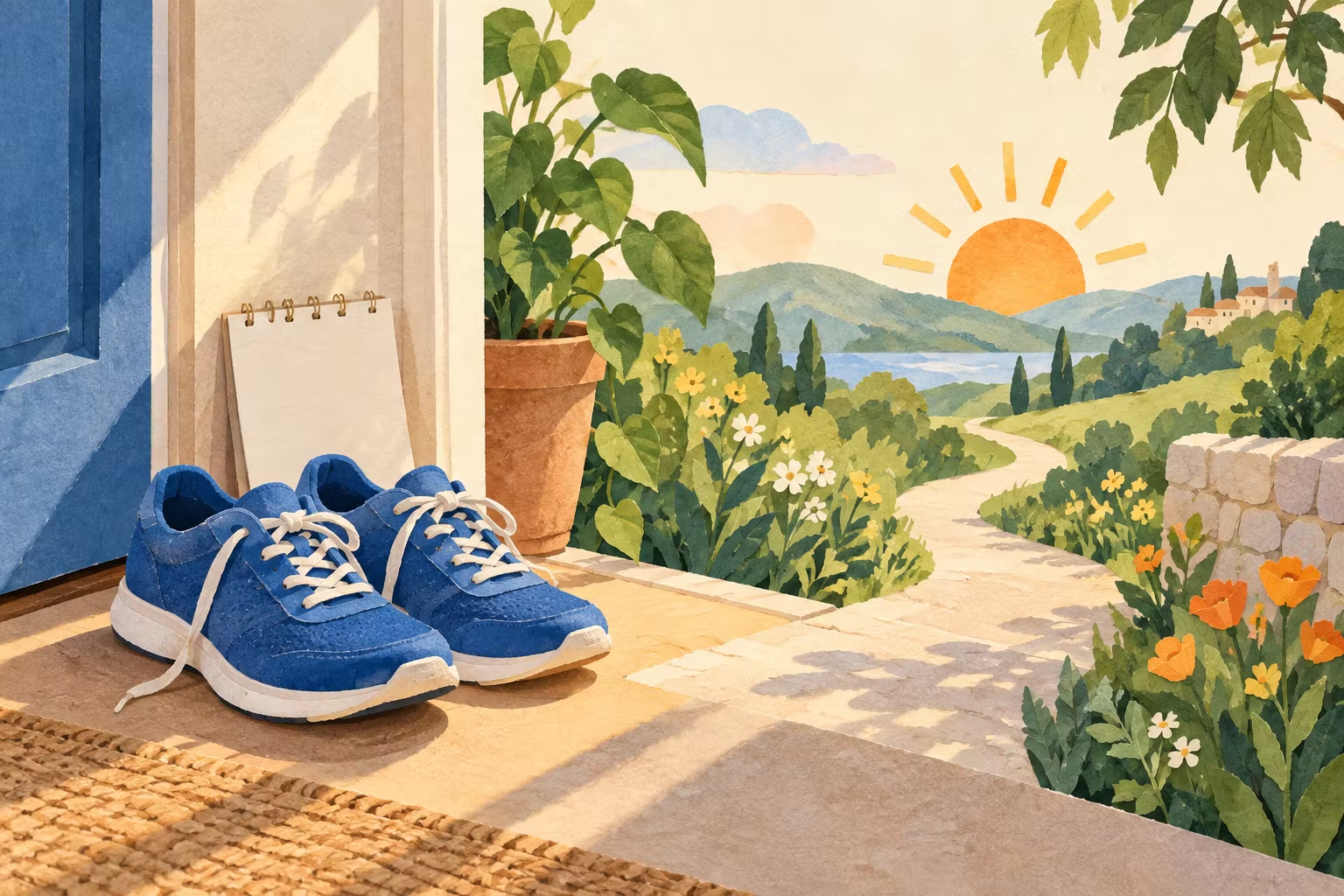
How do you exercise when you are tired after work?
Plan a smaller, easier session for after work and start it before you sit down at home. A 10-minute walk straight from the door, with clothes set out that morning, is far easier to begin than a full workout after an hour on the couch.
If after-work sessions keep failing even when small, the time may be the problem rather than you. Moving exercise to lunch or the morning is a fair fix, not a defeat.
Why is after-work exercise so hard to start?
By the end of the day you have made many decisions and used up a lot of attention. At home, the couch, the phone and dinner all compete for the same slot. Each step between walking in the door and starting to move is a place to stop.
That is a design problem more than a willpower problem. The fixes below work on the steps and the cue, not on pushing through.
What are the steps to exercise after work when tired?
- Decide the session in the morning, not at 6 p.m. Write an if–then plan: "If I get home, then I put on my shoes and walk for 10 minutes before I sit down." Across 94 tests, if–then plans had a medium-to-large average effect on following through on goals (Gollwitzer & Sheeran, 2006), though those tests covered many kinds of goals.
- Set out what you need before you leave. Shoes by the door, clothes on the bed, a water bottle filled. Each removed step makes the start easier.
- Start before you sit. Make the cue "walking in the door," not "after I relax." Sitting down first makes the next start much harder for many people.
- Shrink the default. Plan 10 to 15 easy minutes. On hard days, a 2-minute version still keeps the routine alive.
- Choose low-effort activities for tired days. An easy walk, gentle cycling or stretching often fits after work better than intense training.
- Plan one rest day on purpose. A planned rest day is part of the routine. An unplanned skip is easier to turn into a streak of skips.
Is it tiredness you can move through, or a reason to rest?
Not all tiredness is the same. This table helps you decide on the day. It is a guide for routine decisions, not medical advice.
| How you feel |
Try this |
Why |
| Mentally drained, body feels fine |
The short default session |
Mental fatigue often feels like physical fatigue |
| Physically tired after an active job |
Gentle stretching or a slow walk |
Your body may already have moved a lot |
| Short on sleep for several nights |
The 2-minute version or rest |
Rest may matter more today |
| Sick, feverish or in pain |
Rest |
Exercise can wait |
| Tired most days for weeks |
Talk to a clinician |
Ongoing fatigue can have medical causes |
Will exercise give you more energy?
Maybe, but do not count on it. A meta-analysis found that regular exercise increased reported energy and reduced fatigue compared with control conditions, with a modest average effect. However, studies that used a placebo control and tested exercise alone found no effect (Puetz, O'Connor & Dishman, 2006). So an energy boost is possible, but it is not a reliable promise. It is better to build a session small enough that you will do it even when it does not feel energizing.
A worked example: Sam's after-work plan
Sam works an office job, commutes by train and gets home around 6:15 p.m. For weeks he planned to exercise after dinner and did it about once a week.
He changed the setup:
- Morning: Sneakers and a jacket go by the front door before he leaves.
- Cue: "When I walk in the door, I switch shoes and walk the loop to the park and back." That takes 12 minutes.
- Tired-day version: Walk to the corner and back, about 3 minutes.
- Rest day: Friday, planned.
- Tracking: He ticks the habit tracker whether he did the full loop or the short version.
After two weeks he had walked on eight of ten workdays, three of them the short version. Nothing about his energy changed at first. What changed was that sitting down no longer came before the walk.
When does the advice change?
If after-work sessions still fail after two weeks of small attempts. Try a different time. A randomized trial of 192 adults found that linking a behavior to a daily routine or to a clock time led to similar habit outcomes (Keller et al., 2021). A walk after lunch or before work may simply fit your energy better.
If your hours change from day to day. Use an event cue, such as getting home, rather than a clock time, and keep an indoor backup for late or dark evenings.
If you are starting from very little activity. Begin with the guide to exercising when out of shape, which starts even smaller.
If you have a health condition. If you have a heart, lung or joint condition, diabetes, are pregnant or have had chest pain or dizziness, check with a clinician about what is safe for you. Persistent tiredness is also worth mentioning to a doctor.
This page does not promise weight, fitness, sleep or mood changes. It is about making the session happen.
Where to go next
Walking is often the easiest after-work option. The guide to starting a walking habit covers routes and cues, and the 30-day walking habit plan includes a day to plan for bad days and dark evenings. You can also build a personal plan or browse the exercise and walking topic hub.