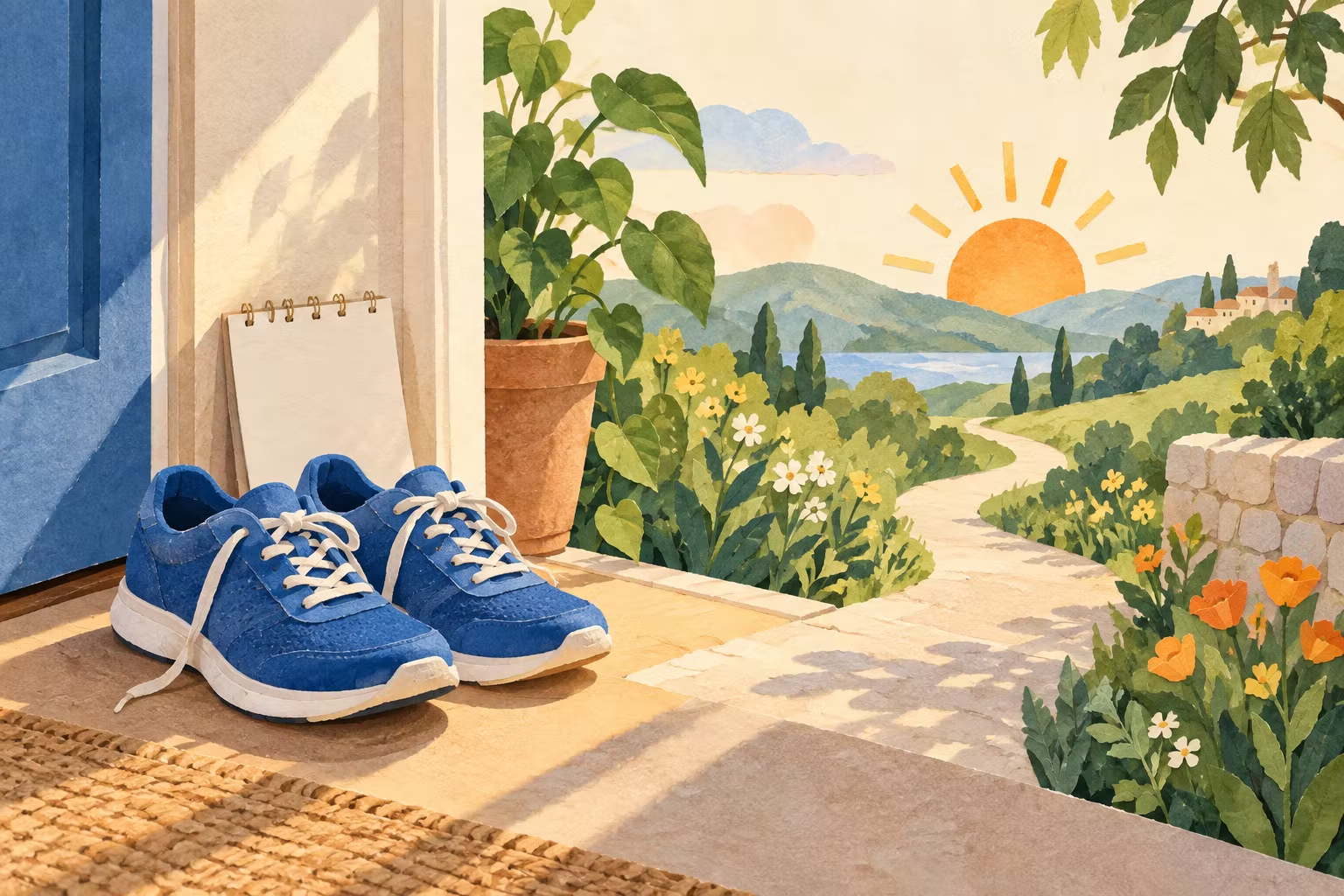
Start with a walk that fits your day
To start walking regularly, choose a route, a realistic duration, and a cue you encounter on most planned days. The plans below offer a five-minute doorway version and a fifteen-minute lunch or commute version. Edit the downloadable sheet if your route, time, or planned days differ. These are habit-starting examples, not exercise prescriptions.
Pick the cue before the distance
“Walk more” does not tell you when to put on your shoes. Try “After lunch, I will put on my shoes and walk the first block,” or “When I arrive home, I will take a short loop before sitting down.” Put your shoes where the cue happens. If your lunch time changes but lunch still occurs, the event may be easier to use than a fixed clock time. Either can work: a randomized nutrition study found no clear difference between routine and time-based cue planning for that behavior.
An experiment with 127 working midlife adults compared walking plans in consistent and varied contexts. Both planning groups increased walking during the intervention, but only the consistent-context group developed and maintained walking automaticity; the expected maintenance of walking amount itself was not shown. That distinction matters: a cue may make starting feel more automatic without guaranteeing long-term activity levels. See the walking habit trial.
Choose a route you can actually take
Walk to a nearby corner and back, around a block, or through a corridor if that is what the day permits. Decide where you will turn around before you leave. For a five-minute plan, start with the smallest route that feels comfortable. For the fifteen-minute plan, use a route close to work or home and keep a shorter backup for days when the window disappears.
The habit plan is about a repeatable start. If you have an individual health concern, your appropriate activity level is separate from this template. Choose a route and pace that are suitable for you.
Make the next start easy
Leave shoes, coat, or keys where you see them at the chosen cue. If weather or a schedule change interrupts the outdoor walk, use an indoor route or put on your shoes and take a brief loop when possible. Record the obstacle in the sheet. Repeatedly changing the whole plan every day makes it hard to learn which cue works; change one element at a time.
Review after two weeks
Look at the dates and notes rather than only the number of walks. Did the cue occur? Was the route pleasant and practical? Could you start without a long negotiation? If the answer is mostly yes, continue the same plan. If not, shorten the route or choose another reliable cue. Habit timing varies across people and behaviors, so fourteen days is a review point, not a finish line; the habit-formation study found wide variation in its modeled participants.
What if I miss a walk?
Return at the next planned cue. You do not need to “repay” missed minutes in one outing. Note whether the cue disappeared, the route was inconvenient, or you simply needed a shorter version.
Is a very short walk worth logging?
Yes, if the purpose of the sheet is to learn whether you started at the cue. Record actual minutes and notes honestly. The short version should not be presented as equivalent to a larger fitness goal; it is a way to keep the routine observable.
Want a plan shaped around your own reason and obstacles?
Build my exercise & walking plan