Fun and free time 3/10
Put one fun plan on the calendar every week
Plans with a date happen more often than someday plans, and the waiting is part of the fun.
 DailyHabitAI
FREE TEMPLATE · 8 AREAS · PRINTABLE
Score 8 areas of your life from 1 to 10 and watch your wheel of life take shape. See your two lowest areas with one small habit for each, then print it.
Example wheel · move the sliders to score yours
Average 5.4 out of 10. Your wheel is a little bumpy: 4 points between your highest and lowest area.
Fun and free time 3/10
Put one fun plan on the calendar every week
Plans with a date happen more often than someday plans, and the waiting is part of the fun.
Money 4/10
Check your balance and last week's spending for 5 minutes every Sunday
A fixed weekly look is small enough to keep and shows where money leaks.
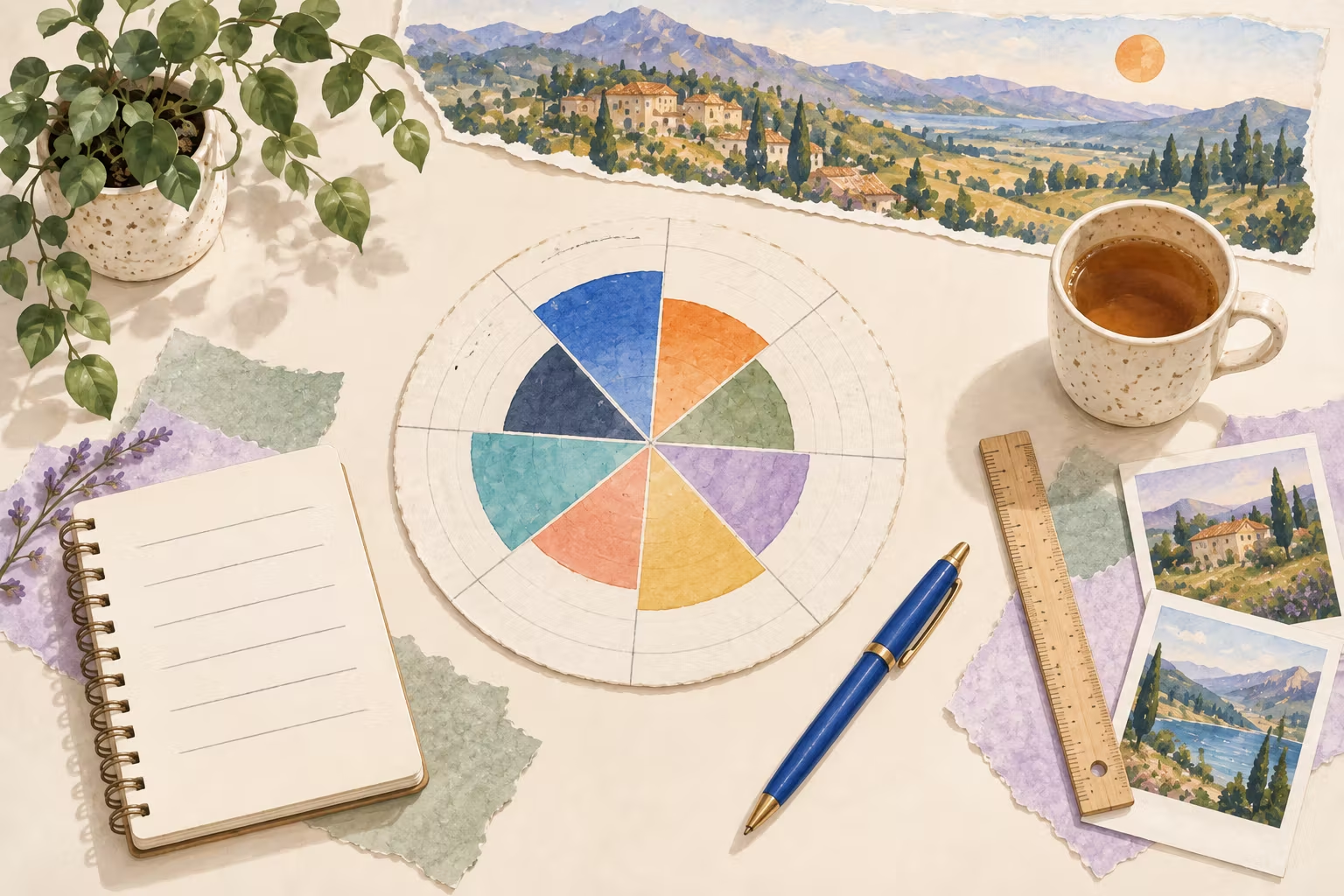
The wheel of life is a one-page coaching exercise: you score eight areas of your life, such as health, money and relationships, from 1 to 10 and see the shape they make. Low scores show where a small change would help most. Pick your lowest one or two areas and start one small habit for each.
| Area | Question to ask yourself |
|---|---|
| Health | Do I have the energy, sleep and movement I want? |
| Career | Is my work or study going where I want it to? |
| Money | Do I feel calm about money this month? |
| Family and friends | Do I see and hear from the people I care about enough? |
| Partner and love | Do I feel close to my partner, or content being single? |
| Fun and free time | Do I have time for things I do just because I enjoy them? |
| Personal growth | Am I learning and growing in a way that matters to me? |
| Home | Is my home a place I like to come back to? |
The example above scores fun and free time at 3 and money at 4, while career and family sit at 7. The average is 5.4, but the wheel is bumpy. Instead of trying to fix everything, this person picks fun: they put one plan a week on the calendar, starting with a few ideas from their bucket list. For money, a five-minute look at the bank app every Sunday is enough to start. A month later they score the wheel again and compare.
The wheel of life is usually credited to Paul J. Meyer, who founded the Success Motivation Institute in 1960 and built goal-setting programs around a "wheel" of life areas, probably in the 1960s. The exact origin is not documented, and many versions exist today with six, eight or ten areas. It is now one of the most common tools in life coaching.
It is a quick way to notice what you have been ignoring, and a good start for a conversation with yourself, a partner or a coach. It is not a validated test: scores change with your mood that day, and a 5 means different things to different people. Researchers who measure life satisfaction use short tested questionnaires instead. If an area such as health or mood scores very low for weeks, talk to a doctor or a counselor.
Not sure what matters most to you? Find your top five with the core values finder, then set one goal for your lowest area with the SMART goals generator. For small, research-backed habits across sleep, movement, food and stress, read healthy lifestyle habits.
A common set is health, career, money, family and friends, partner and love, fun and free time, personal growth, and home and environment. There is no official list. Rename any area in the template above, for example to faith, study or community, and the wheel keeps your names.
It is usually credited to Paul J. Meyer, who founded the Success Motivation Institute in 1960, probably in the 1960s. The exact origin is not documented. Coaches have used and adapted it ever since.
Rate how satisfied you feel with each area right now, from 1 (not at all) to 10 (completely). Go with your first answer. The score is not a grade: a 6 you are happy with is fine, and nobody needs a 10 everywhere.
Look at your two lowest areas and ask which one you most want to change. Choose one small action for it, tie it to something you already do each day, and track it for a few weeks. The template suggests a habit for each low area and links to a matching 30-day plan.
Every one to three months works for most people, or after a big change like a new job. Press Save this score, then come back later and choose it under Compare to see what moved.
Yes. Print my wheel prints your filled wheel with scores and your two focus areas on one page. Print blank template gives an empty wheel with the eight areas and numbered rings to color in by hand.
No. It is a reflection tool, not a validated test, and the scores are your own feelings on one day. Use it to start a conversation with yourself or a coach, not to diagnose anything. If an area feels very hard, such as health or mood, talk to a professional.
New plans, guides and app features, a few times a month at most.