Week 1 · Sep 28–Oct 4This week
- AlexDishes and counters, Trash and recycling5 pts
- SamBathroom, Groceries and restock5 pts
- JordanFloors: vacuum and mop, Living room tidy5 pts
 DailyHabitAI
ROOMMATES · COUPLES · FAMILIES · TURNS WEEKLY
Free chore wheel maker: add 2 to 8 roommates or family members and your chores, split them fairly by effort, then print a cut-out wheel or a rotation table.
Week 1 · Sep 28–Oct 4This week
Starts Sep 28–Oct 4. Everyone moves one slice each week, so after 3 weeks each person has done every chore once.
| Week | Alex | Sam | Jordan |
|---|---|---|---|
| Week 1Sep 28–Oct 4 | Dishes and counters, Trash and recycling5 pts | Bathroom, Groceries and restock5 pts | Floors: vacuum and mop, Living room tidy5 pts |
| Week 2Oct 5–11 | Bathroom, Groceries and restock5 pts | Floors: vacuum and mop, Living room tidy5 pts | Dishes and counters, Trash and recycling5 pts |
| Week 3Oct 12–18 | Floors: vacuum and mop, Living room tidy5 pts | Dishes and counters, Trash and recycling5 pts | Bathroom, Groceries and restock5 pts |
| Week 4Oct 19–25 | Dishes and counters, Trash and recycling5 pts | Bathroom, Groceries and restock5 pts | Floors: vacuum and mop, Living room tidy5 pts |
| Week 5Oct 26–Nov 1 | Bathroom, Groceries and restock5 pts | Floors: vacuum and mop, Living room tidy5 pts | Dishes and counters, Trash and recycling5 pts |
| Week 6Nov 2–8 | Floors: vacuum and mop, Living room tidy5 pts | Dishes and counters, Trash and recycling5 pts | Bathroom, Groceries and restock5 pts |
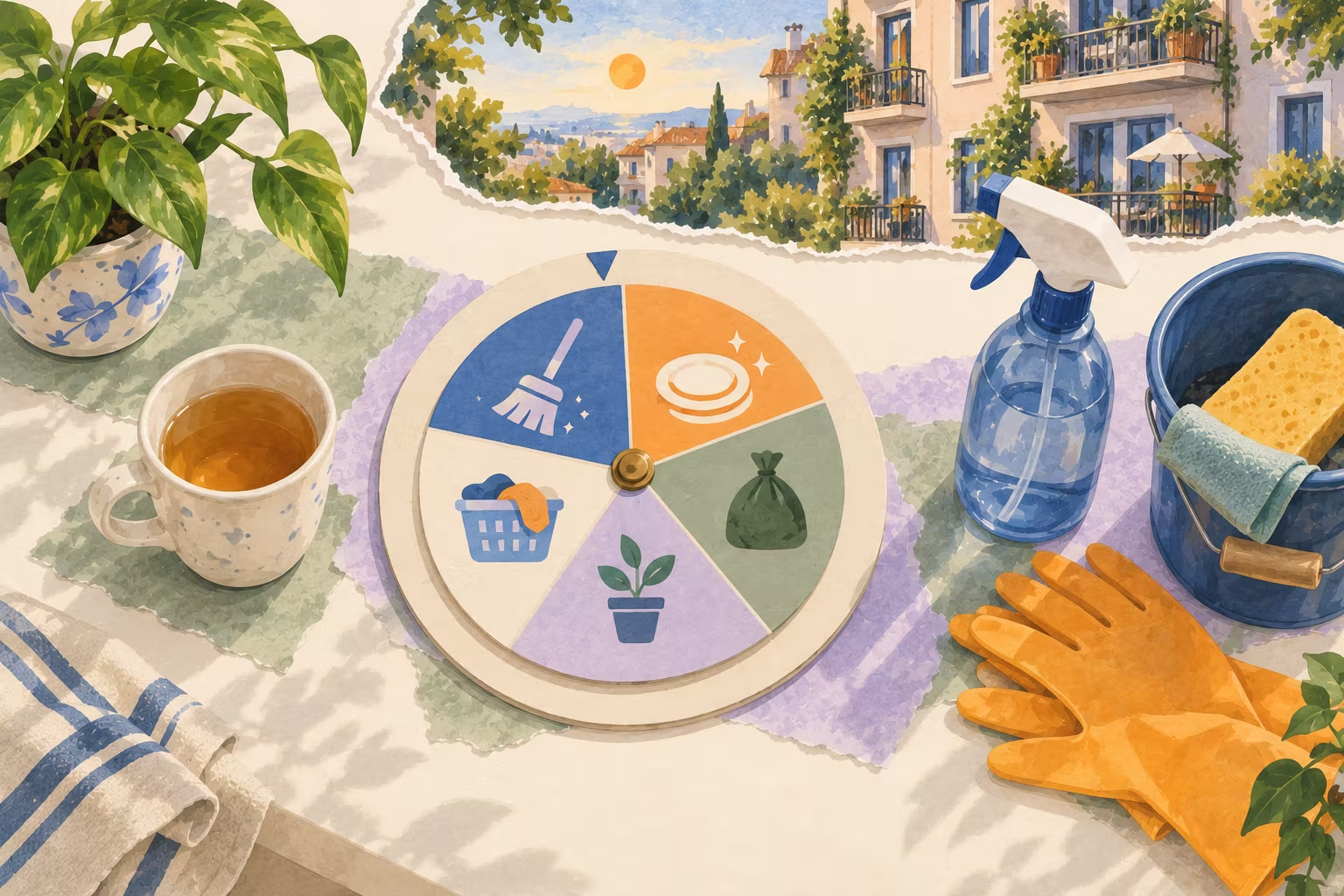
A chore wheel is two circles pinned together: names on the outer ring and chores on a smaller inner wheel that turns one slice each week, so everyone takes a turn at every job. To keep it fair, give each chore effort points, group the chores into slices with equal points and put the wheel where everyone sees it.
Fair does not have to mean identical. What hurts a shared home is one person feeling they do more than their share: in a survey of 10,236 people living with a partner, those who felt the split was unfair to themselves were less satisfied with the relationship, and that feeling mattered more than the exact percentages (Gillespie and colleagues, 2019). Housework sharing matters to most people: 62% of US adults rated it very important for a good marriage in a Pew Research Center survey.
| Compare | Chore wheel | Chore chart |
|---|---|---|
| Best for | Roommates, couples, families with teens | Kids, or one person's daily jobs |
| How jobs change | Everyone moves one slice each week | Same chores, ticked each day |
| Fairness | Built in: everyone does every slice in turn | Set by whoever writes the chart |
| Format | Cut-out wheel or rotation table | Weekly grid, checklist or picture chart |
For younger children, use the chore chart maker: it sorts chores by age and has a picture chart for kids who cannot read yet. For the cleaning itself, the cleaning schedule maker lists what to clean each day of the week, and house rules help when the household includes kids.
Each person's name sits on the outer ring and the chores are grouped into one slice per person on the inner wheel. Line the slices up with the names, and each Monday turn the inner wheel one slice. After as many weeks as there are people, everyone has done every slice once.
List every shared job, including the invisible ones such as buying supplies or paying the internet bill, and give each a few effort points (1 point is about 15 minutes a week). Group them into slices with the same total and rotate weekly, so nobody is stuck with the bathroom for good. Agree on what done means for each chore.
Weekly suits most homes: long enough to finish a full job, short enough that nobody is stuck with a disliked chore. Couples and households with very different schedules sometimes rotate every two weeks; just keep the same day so everyone knows when it turns.
That is the normal case. Each slice holds several chores, grouped so the slices have about the same points. With Fair split on, the tool puts the heaviest chores in first and adds each one to the lightest slice. With fewer chores than people, someone has a free week in turn.
Print the cut-out wheel on card stock, cut out both circles, push a paper fastener (brad) through the two center pin marks and bend its legs at the back. Line the inner slices up with the names, then turn the small wheel one slice each week. Tape the back to the fridge or a door.
Yes. With two people the wheel has two halves and they swap every week, so each of you does every job every other week. If your work hours are very different, skip the wheel for a few fixed jobs and keep it for the ones you both dislike.
Older kids and teens can share a wheel with adults. Younger children usually do better with a chart they tick every day: the chore chart maker sorts chores by age and has a picture chart for kids who cannot read yet.
Yes, in this browser on this device: names, chores, points and options. Nothing is sent to our server and there is no sign-up. Print it, or save an image to share with everyone in the group chat.
New plans, guides and app features, a few times a month at most.