How do you meditate at home as a beginner?
To meditate at home as a beginner, sit somewhere quiet and comfortable, set a timer for five minutes, and rest your attention on your breathing. When your mind wanders, which it will, notice where it went and gently bring it back. That noticing and returning is the practice itself, not a sign you are doing it wrong.
This guide covers the practice itself: how to set up a spot at home, how to sit, a word-for-word five-minute script, and what to do when common problems come up. If you want help making meditation a daily habit, see how to start a meditation habit.
What do you need to meditate at home?
Very little. You do not need a special cushion, an app or a silent house. You need:
- A place to sit. A chair, a couch, a cushion on the floor or the edge of your bed all work.
- A few minutes without interruption. Five is plenty to start.
- A timer. Using a timer means you do not have to check the clock. The meditation timer gives you a gentle bell at the start and end.
- Something to put your attention on. For most beginners, that is the breath.
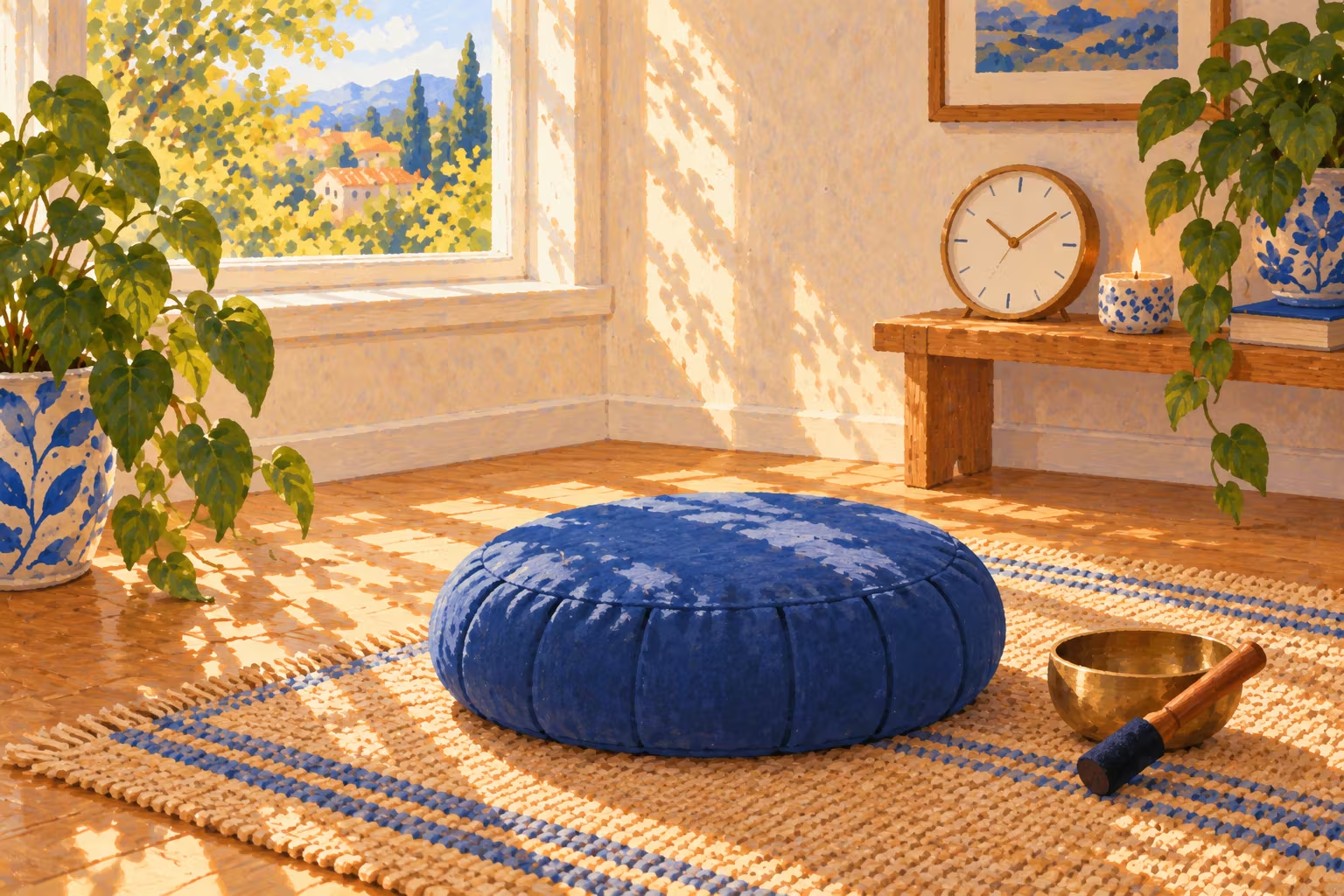
Optional extras, like a blanket, a candle or a particular spot by a window, can make the time feel more inviting. They are nice but not necessary.
How do you set up a meditation spot at home?
A consistent spot helps your mind recognize "this is where I sit." It does not need to be a dedicated room.
- Pick one place. A corner of the bedroom, a chair in the living room, or the same end of the couch.
- Face away from clutter and screens. A blank wall or a window is easier to settle in front of than a pile of laundry.
- Keep what you need there. A cushion or folded blanket, and your phone set to do not disturb.
- Tell your household. A simple "I'm taking five minutes, back soon" prevents most interruptions.
- Accept some noise. Traffic, a neighbor or a dishwasher is fine. You can include sounds in what you notice rather than fighting them.
How should you sit when you meditate?
Choose a posture that is upright enough to stay alert and relaxed enough to stay comfortable. There is no single correct way.
| Posture |
How to do it |
Good for |
| Chair |
Feet flat on the floor, back away from the chair back if you can, hands resting on thighs |
Most beginners, stiff hips or knees |
| Cushion |
Sit on the front edge of a firm cushion, legs loosely crossed, knees lower than hips if possible |
People comfortable on the floor |
| Kneeling |
Kneel with a cushion or rolled blanket between your heels and seat |
People who find cross-legged sitting hard |
| Lying down |
On your back, arms by your sides, knees bent if that helps your lower back |
Pain, fatigue, or a body scan practice |
Lying down is a valid option, though some people find it easier to drift off. See can you meditate lying down for tips.
Whatever you choose, let your shoulders drop, soften your jaw and rest your hands. Close your eyes, or keep them open with a soft gaze on a spot on the floor.
What are the steps to meditate for the first time?
- Sit down and set your timer for five minutes.
- Take three slower breaths to mark the start.
- Let your breathing return to normal. You do not need to control it.
- Pick one place to feel the breath: the nose, the chest or the belly.
- Rest your attention there. Notice the in-breath and the out-breath.
- When you notice your mind has wandered, silently note "thinking" and return to the breath.
- Repeat step 6 as many times as needed.
- When the timer ends, take one more breath, open your eyes and notice how you feel before you get up.
What is a simple 5-minute meditation script?
You can read this through once before you start, or record yourself reading it slowly and play it back. The times are rough guides.
Minute 0 to 1: Arriving
Settle into your seat. Let your hands rest. Close your eyes or lower your gaze. Take three slow breaths in through your nose and out through your mouth. On the last one, let your breathing go back to its own rhythm.
Minute 1 to 2: Finding the breath
Notice where you feel your breath most clearly. Maybe the cool air at your nostrils, the rise of your chest or the movement of your belly. Choose one spot. Rest your attention there, the way you might rest your hand on a table.
Minute 2 to 4: Staying and returning
Follow each breath in and each breath out. At some point you will notice you are thinking about something else. That is normal. Silently say "thinking," and bring your attention back to the breath. No need to judge it. Each time you return is one repetition of the practice.
Minute 4 to 5: Widening out
Let your attention widen to your whole body sitting here. Notice the contact of your body with the seat, the sounds in the room, the air on your skin. When you hear the bell, take one more full breath and open your eyes.
What if your mind keeps wandering?
It will, and that is expected. A smartphone study that sampled what people were thinking during everyday activities found that they were thinking about something other than what they were doing almost as often as they were focused on it (Killingsworth & Gilbert, 2010). A wandering mind is the normal starting point, not a beginner's flaw.
The skill you build is noticing sooner and coming back more gently. Counting breaths from one to ten and starting over can help on busy-mind days. For more techniques, read what to do when your mind wanders during meditation.
What are other common beginner problems, and how do you fix them?
| Problem |
What to try |
| Falling asleep |
Sit upright instead of lying down, open your eyes slightly, or meditate earlier in the day. |
| Restlessness or itching |
Notice the urge for a few breaths before moving. If you still need to move, move slowly and return to the breath. |
| Back or knee discomfort |
Switch to a chair, add a cushion, or change position partway through. Comfort matters more than form. |
| Feeling like nothing is happening |
That is common. Meditation is often quiet and ordinary. Focus on whether you noticed and returned, not on special feelings. |
| Noise at home |
Include sounds in your attention. Name them silently, "car," "voice," and return to the breath. |
| Feeling more anxious |
Open your eyes, feel your feet on the floor, and shorten the session. If it keeps happening, stop and talk to a professional. |
Which approach fits your situation?
| Your situation |
What to try |
| Busy schedule |
Two to three minutes right after a daily anchor, like after brushing your teeth. Short and regular beats long and rare. |
| Low energy |
Sit in a chair with eyes open, or try a brief body scan lying down with a timer. |
| Restarting after a break |
Go back to five minutes with the script above. Do not try to match your longest session. |
| Weekends |
Keep the same spot, and try one longer session of 10 minutes if it feels good. |
| Small home or shared space |
Sit on the bed or in the car before going inside. Headphones with no audio can signal "do not disturb." |
If you are unsure how long to sit, how long you should meditate as a beginner walks through the options.
What does a first week of home meditation look like?
Here is one simple week for someone who meditates in the bedroom before breakfast.
| Day |
Practice |
Time |
| 1 |
Breath at the nose, using the script |
5 minutes |
| 2 |
Same as day 1 |
5 minutes |
| 3 |
Breath at the belly, counting one to ten |
5 minutes |
| 4 |
Short body scan from feet to head |
5 minutes |
| 5 |
Breath, then one minute of listening to sounds |
5 minutes |
| 6 |
Choose your favorite from days 1 to 5 |
5 to 7 minutes |
| 7 |
Same, then write one line about the week |
5 to 7 minutes |
A worked example, day 3: Sam wakes at 6:45, uses the bathroom, and sits on a folded blanket at the end of the bed. They start the timer and count breaths at the belly. By breath four they are planning a work email. They notice, say "thinking" silently, and start again at one. That happens about eight times in five minutes. At the bell, Sam notes that the mornings they return more quickly feel calmer, and gets on with the day.
What are common mistakes when meditating at home?
- Trying to empty your mind. The goal is to notice where your attention goes, not to stop thoughts.
- Starting too long. Twenty minutes on day one is hard to repeat. Five is enough.
- Judging each session. A restless session where you came back many times is still a complete session.
- Waiting for a perfectly quiet house. Use the time you have and include the noise.
- Switching methods every day. Stay with one simple approach for a week before trying another.
What does research say about meditation, and what are its limits?
A large review for JAMA Internal Medicine pooled 47 randomized trials with 3,515 participants in adults with a range of health conditions (Goyal et al., 2014). It found moderate evidence that mindfulness meditation programs led to small improvements (effect sizes of roughly 0.2 to 0.4) in anxiety, depression and pain, and low or insufficient evidence for other outcomes such as positive mood, attention and sleep.
The limits matter. Those were structured programs, often lasting weeks, with trained teachers. They do not tell you what five minutes at home will do for you, and they do not show that meditation replaces medical or mental health care. Treat home practice as a way to train attention and take a short pause, not as a treatment.
Some people find that meditation brings up distressing thoughts or feelings. If that happens, stop, and talk to a doctor or mental health professional, especially if you have a history of trauma or a mental health condition.
Where should you go from here?
Try the five-minute script today, using the meditation timer. If you want a guided month, the 30-day meditation plan for beginners gives you one short practice a day. You can also build a meditation plan around your routine or browse the mindfulness topic hub.